How To Make A Simple Weather Station Project
We may earn a commission for purchases made using our links. Please see our disclosure to learn more.
A good science project does not have to start with expensive equipment or a kitchen table covered in mysterious goo. Sometimes, all you need is a few simple tools, a curious kid, and the weather happening right outside your window.
A Weather Station Project is one of the best hands-on STEM activities because it turns everyday weather into something kids can measure, question, record, and understand. Instead of just hearing “it might rain,” they get to ask, “How do we know?” That tiny shift is where real learning begins.
In this guide, you’ll learn how to build a simple weather station, track weather data, make predictions, and turn the whole project into a fun STEM learning experience for toddlers, preschoolers, elementary students, or older kids.
What Kids Learn From a Weather Station Project
A weather station teaches kids that science is not just something printed in a textbook. It is something they can see, touch, test, and argue about at breakfast.
Through this project, kids can explore:
- Temperature
- Rainfall
- Wind direction
- Wind speed
- Humidity
- Air pressure
- Cloud types
- Weather patterns
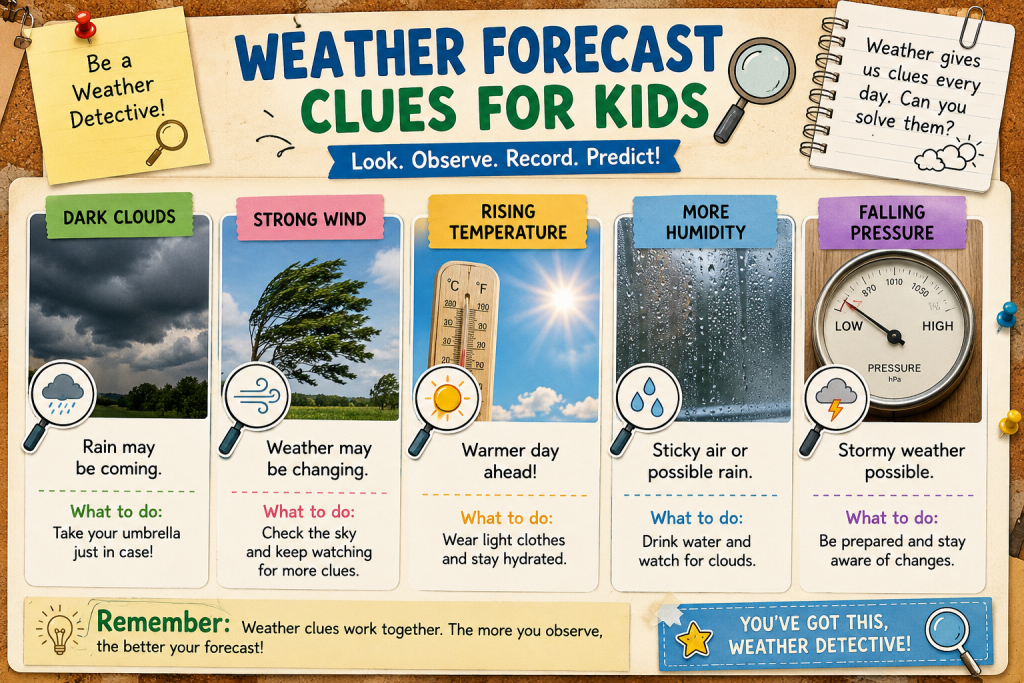
The best part? It builds observation skills. Kids learn to notice small changes, like darker clouds, stronger wind, or a sudden drop in temperature. That is science with muddy shoes on.
Supplies You Need Before You Start
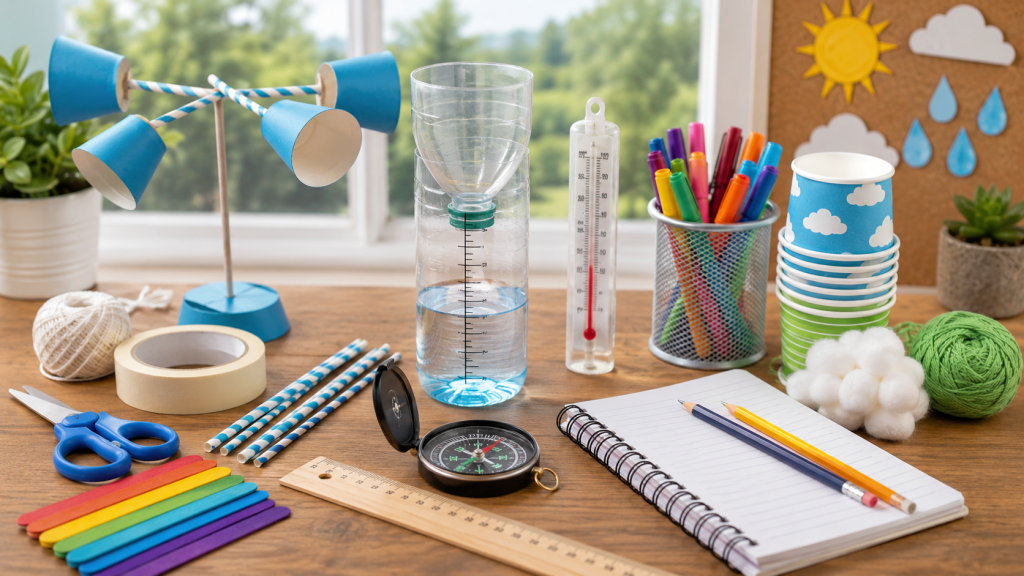
You can keep this project simple or make it more advanced. For a basic DIY weather station, gather:
- Clear plastic bottle or jar
- Ruler
- Permanent marker
- Straw
- Pencil with eraser
- Paper plate or cardboard
- Compass
- Small stones
- Tape
- Scissors
- Thermometer
- Notebook or printable weather chart
For older kids, you can add a hygrometer, barometer, digital thermometer, or Arduino weather sensor. Start small, though. A project kids actually finish is better than a “perfect” setup that sits untouched in the corner.
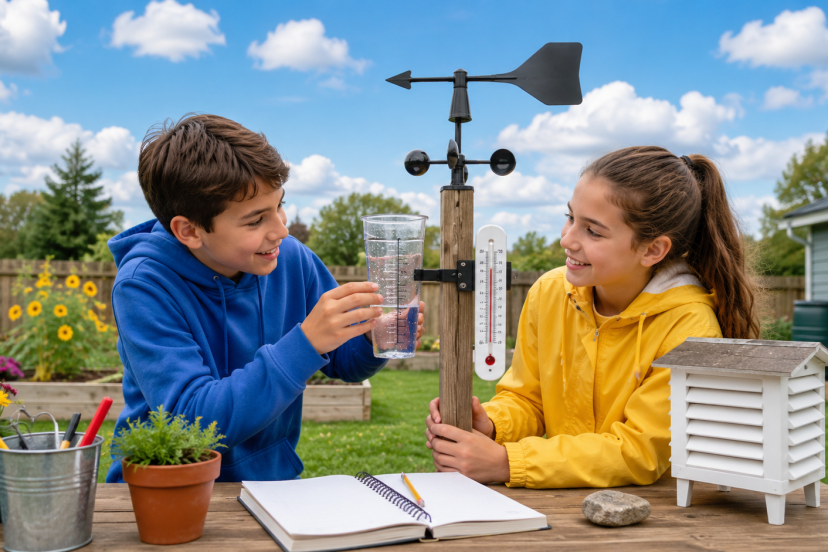
Choose the Best Spot for Your Backyard Weather Station
Location matters. A weather station under a tree will not measure rain properly. A thermometer in direct sunlight may read hotter than the actual air temperature.
Try to place your station:
- Away from walls that hold heat
- Away from sprinklers
- In an open area
- Where wind can move freely
- Somewhere kids can safely check it daily
If you live in an apartment, use a balcony, patio, or window area. Just make sure an adult handles anything near ledges or railings.
Make a Rain Gauge That Actually Helps
A rain gauge measures how much rain falls over a set period. It is simple, but kids usually love checking it after a storm. There is something oddly exciting about finding “proof” that yesterday’s downpour was not just dramatic storytelling.
How to make it
Cut the top off a clear plastic bottle. Place small stones in the bottom to weigh it down. Turn the cut-off top upside down and place it inside like a funnel. Tape it in place.
Use a ruler and permanent marker to mark measurement lines on the side. Put the rain gauge outside in an open spot.
Have kids record rainfall once a day, preferably at the same time.
Construct a Wind Vane to Monitor Direction
A wind vane indicates the direction of the wind. This is a great chance to teach north, south, east, and west without making it feel like a geography quiz.
How to make it
Cut an arrow and tail shape from cardboard. Tape them to each end of a straw. Insert a pin into the pencil’s eraser and through the center of the straw.
Place the pencil upright in a cup filled with stones or clay. Using a compass, label north, south, east, and west on the paper plate underneath it.
When the wind blows, the arrow will point toward the direction the wind comes from.
To measure wind speed, add an anemometer.
An anemometer is used to measure wind speed. The homemade version will not give professional readings, but it helps kids understand motion, force, and comparison.
Simple version
Use four small paper cups, two straws, a pencil, tape, and a pushpin. Cross the straws, attach a cup to each end, and pin the middle to the pencil eraser.
Count how many times one marked cup spins in 30 seconds. The wind gets stronger as it rotates more.
It’s also a good time to ask, “What do you notice? Before you explain, let the children make guesses. Their answers may be wonderfully weird, and sometimes weird is where the good thinking starts.
Measure Temperature and Humidity
Temperature is usually the easiest weather measurement for kids to understand. They already know when it feels hot, cold, sticky, or “why-is-the-car-seat-like-lava?”
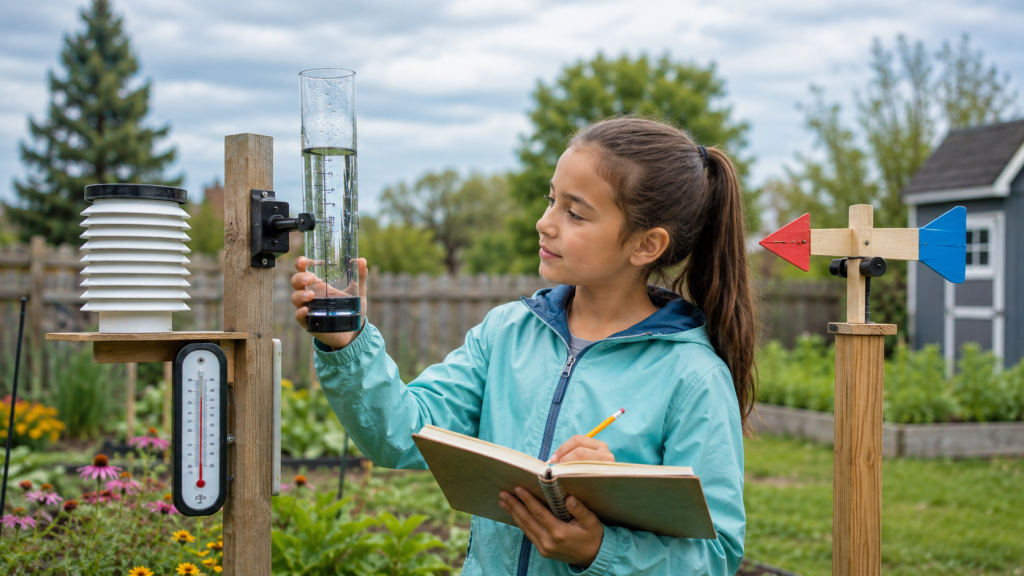
Record the temperature with an outdoor thermometer at the same time every day. If you have a hygrometer, track humidity too.
Humidity measures moisture in the air. A high-humidity day may feel warmer because sweat does not evaporate as easily. That is a very practical science lesson, especially if you live somewhere humid.
Watch Air Pressure and Cloud Clues
Air pressure can help explain why weather changes. A barometer measures pressure, but younger kids can start by observing clouds.
Teach simple cloud clues:
- White, puffy clouds often mean fair weather
- Dark, low clouds may signal rain
- Thin, wispy clouds can appear before changing weather
- Tall, towering clouds may bring storms
According to NOAA, key weather observations include temperature, humidity, precipitation, air pressure, wind speed, and wind direction. That makes a simple home weather station a real introduction to how forecasters think.
Record Weather Data Like a Scientist
A weather journal turns random observations into useful information. Without notes, the project becomes “we looked at clouds.” With notes, it becomes data collection.
Create a chart with columns for:
- Date
- Time
- Temperature
- Rainfall
- Wind direction
- Wind speed
- Cloud type
- Prediction
- What actually happened
Encourage kids to write or draw. Younger children can use weather icons. Older kids can calculate averages, compare weekly changes, or graph patterns.
If you want more hands-on ideas to pair with this activity, add it to a broader list of children’s experiments for science so kids can keep building curiosity through simple projects.
Turn Observations Into Forecasts
Once kids collect a few days of data, invite them to make a forecast. Keep it simple.
Ask:
- Is the temperature rising or falling?
- Did the wind change direction?
- Are clouds getting darker?
- Has air pressure changed?
- Did humidity increase?
Then let them predict tomorrow’s weather. They may be wrong. That is fine. Scientists are not magical weather wizards. They test ideas, compare results, and improve.
This is where the Weather Station Project becomes more than a craft. It becomes a thinking routine.
Connect the Project to Everyday STEM Learning
This activity blends science, technology, engineering, and math in a natural way.
Science appears when kids observe weather. Technology enters when they use thermometers, digital stations, or sensors. Engineering shows up when they build tools that need to stand, spin, or collect rain. Math happens when they measure, count, compare, and graph.
You do not have to announce every subject like a school bell. Kids will feel the connections as they work.
Amazon Products for a Weather Station Project
These products can support different versions of the project, from simple preschool exploration to more advanced STEM learning.
4M: Green Science – Weather Station – DIY Mini Observatory Kit
This hands-on kit helps kids observe wind, rain, and temperature while also connecting weather to plant growth.
Features:
- Mini weather station setup
- Wind, rain, and temperature observation
- Built-in plant-growing feature
- Good for younger learners
Use it for: Families who want an easy, low-prep weather science kit.
PLAYSTEM Space Weather Station Water Cycle Simulation Learning Kit
This kit includes a thermometer, anemometer, compass, weather vane, rain gauge, and learning booklet. It also introduces the water cycle in a visual way.
Features:
- Multiple weather tools
- 40-page learning booklet
- Water cycle activities
- STEM-friendly design
Use it for: Kids who enjoy structured activities with several experiments in one box.
Arduino Official Plug and Make Kit [AKX00069]
This is a stronger fit for older kids, teens, or families who want to connect weather learning with coding and electronics.
Features:
- Arduino UNO R4 WiFi
- Plug-and-play components
- No soldering required
- Supports connected project builds
Use it for: Students ready to explore sensors, coding, and digital weather tracking.
Newentor Weather Station Wireless Indoor Outdoor Thermometer
This digital weather station gives kids an easy way to compare indoor and outdoor conditions. It can show temperature, humidity, barometric pressure, forecast details, and time.
Features:
- Color display
- Wireless outdoor sensor
- Atomic clock
- Barometric pressure reading
Use it for: Families who want simple daily data without building every tool from scratch.
AcuRite Digital Vertical Weather Forecaster, Reverse Color
This home weather station is useful for tracking indoor and outdoor temperature, humidity, barometric pressure, and forecast information.
Features:
- Indoor/outdoor monitoring
- Easy-to-read display
- Forecasting information
- Time and date display
Use it for: Kids who want real household weather data for graphs, journals, and predictions.
Research-Backed Reasons Weather Projects Help Kids Learn
A Weather Station Project works because kids learn by observing, testing, and asking better questions. In a 2024 study on building a weather station from idea to data, students used design, programming, and science skills to create a working weather station.
NOAA also offers a helpful real-time weather data toolbox for young scientists, which lets kids compare their own backyard observations with official weather data.
Research also supports hands-on STEM learning. A 2023 review on the spark created by hands-on STEM activities found that active participation can increase student interest. That is why weather tracking works so well: kids are not just reading about science. They are watching it happen outside.
Troubleshooting Common Problems
If your rain gauge tips over, add more stones or tape it to a flat base. If your wind vane does not move, check that the straw can spin freely. If your readings seem strange, move the station away from walls, vents, direct sun, or covered areas.
Also, keep expectations realistic. Homemade tools are learning tools, not professional meteorology equipment. The goal is not perfect accuracy. The goal is curiosity, pattern-spotting, and better questions.
Extension Ideas for Toddlers, Kids, and Teens
For toddlers, keep it sensory. Ask them to point to sunny, rainy, cloudy, or windy pictures.
For preschoolers, use a simple weather chart with stickers or drawings.
For elementary kids, add measuring tools and daily recording.
For middle schoolers, introduce graphs, averages, and weather comparisons.
For teens, add Arduino sensors, digital spreadsheets, or local weather data from NOAA.
You can also connect weather to culture and daily life. Talk about monsoon seasons, snow days, hurricane preparedness, desert heat, farming calendars, or how different communities plan around weather. Weather is global, but it is also deeply local.
FAQs About a Weather Station Project
What is the easiest Weather Station Project for kids?
The easiest version includes a rain gauge, thermometer, wind vane, and weather journal. Kids can build most of it with household materials and start recording observations the same day.
What age is best for a homemade weather station?
Preschoolers can observe and draw weather, while elementary students can measure and record data. Older kids can add graphs, barometers, sensors, or coding tools.
How long should kids track weather data?
One week is enough for a quick project, but two to four weeks gives kids better patterns to study. Longer tracking helps them compare warm days, rainy days, and wind changes.
Can you make a weather station indoors?
You can track indoor temperature and humidity indoors, but rain and wind tools need outdoor exposure. If outdoor space is limited, use a balcony, patio, or window-safe digital sensor.
What should kids do with weather data?
Kids can graph temperature, compare rainfall, count windy days, make forecasts, and write short weather reports. This turns simple notes into real STEM analysis.
Conclusion
A Weather Station Project gives kids a simple, memorable way to practice STEM skills without making learning feel stiff or intimidating. They build tools, collect data, notice patterns, and make predictions from the world around them.
Start with the basics: rain, wind, temperature, and a notebook. Then add tools or digital upgrades as curiosity grows. The real win is not a perfect forecast. It is that little spark when a child looks outside and says, “Wait, I think the weather is changing.” That is science waking up.