How To Introduce Physics For Kids Through Play
We may earn a commission for purchases made using our links. Please see our disclosure to learn more.
Helping a child understand physics can sound intimidating at first. You may picture complicated formulas, heavy textbooks, or a classroom board full of symbols that make everyone quietly panic. But Physics For Kids does not need to start there.
It can start with a toy car rolling down a pillow ramp, a magnet sticking to the fridge, a paper airplane nosediving across the room, or a child asking, “Why did that fall?”
That question is the doorway.
In this guide, you’ll learn how to introduce Physics For Kids through play, simple experiments, everyday objects, and hands-on STEM learning. You’ll also find product ideas, research-backed support, and practical activities you can use at home, in a classroom, or during homeschool lessons.
Affiliate disclaimer: This article includes Amazon product suggestions; if you buy through affiliate links, we may earn a small commission at no extra cost to you.
What Physics For Kids Really Means
Physics For Kids is simply the study of how things move, push, pull, fall, float, spin, bounce, and change.
That’s it. No scary lecture required.
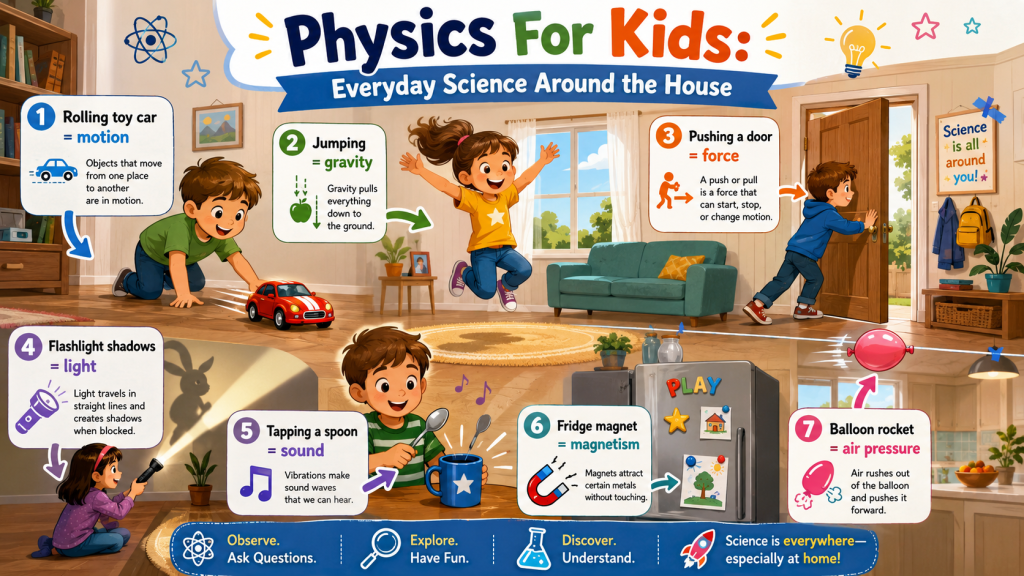
Physics explains why a ball rolls faster down a steep ramp, why a swing slows down, why a balloon zooms across the room when you let it go, and why a backpack feels heavier after a long walk.
For younger children, physics is best introduced through:
- Motion
- Gravity
- Force
- Energy
- Magnets
- Light
- Sound
- Simple machines
- Electricity
You do not need to “teach physics” like a professor. You just need to notice the science already happening around your child.
Why Play Makes Physics Stick
Children learn best when their hands, eyes, ears, and imagination work together. That is why play-based science activities are so powerful.
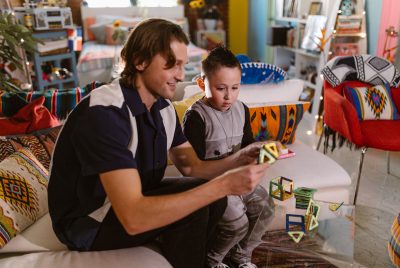
A child who pushes a toy truck across carpet, tile, and cardboard is not “just playing.” They are testing friction. A child stacking blocks and watching them tumble is exploring balance, gravity, and structure. A child splashing in water is noticing motion, force, and cause and effect.
Play makes STEM learning feel natural because kids get to test ideas before they need formal vocabulary.
Instead of starting with, “Today we will discuss gravity,” try:
“What do you think will happen if we drop this feather and this spoon?”
That tiny shift turns learning into discovery.
Start With Forces And Motion
Force and motion are perfect starting points for Physics For Kids because children already experience them every day.
They push doors, pull drawers, kick balls, ride bikes, drag blankets, and slide across the floor in socks like tiny chaos scientists.
Try This Simple Activity
Use a cardboard piece and a book to create a ramp. Take a toy vehicle down the ramp.
Ask:
- What happens when the ramp is higher?
- Does the car travel farther on tile or carpet?
- What happens if we use a heavier car?
- Can we make it stop sooner?
This teaches motion, friction, speed, and prediction without making it feel like a formal lesson.
Turn Everyday Objects Into Mini Physics Experiments
You do not need a fancy lab to teach kids physics. Your kitchen, hallway, backyard, and living room already have enough material.
Try using:
- Spoons for sound experiments
- Balloons for air pressure
- Flashlights for light and shadows
- Magnets for attraction and repulsion
- Paper airplanes for lift and drag
- Pillows and cardboard for ramps
- Plastic cups for stacking and balance
One of my favorite low-effort activities is the “which surface wins?” test. Roll the same ball across carpet, wood, tile, and a towel. Kids quickly notice that surfaces change how far objects move.
That is friction in action. No worksheet needed.
Use Questions Before Explanations
When introducing science concepts for kids, resist the urge to explain everything right away.
I know. It is hard. Adults love answers. Kids love wondering.
Instead, ask first:
- “What do you notice?”
- “Why do you think that happened?”
- “What could we change?”
- “Should we test it again?”
- “Did it do what you expected?”
This builds scientific thinking. Children learn to observe, predict, test, and revise.
Even better, they learn that being wrong is not embarrassing. It is part of the experiment. Honestly, half of science is just saying, “Well, that was weird,” and trying again.
Age-By-Age Physics Activities For Kids
Physics For Kids works best when activities match a child’s age, attention span, and motor skills.
Preschool And Kindergarten
Keep activities sensory and simple.
Try:
- Sink or float experiments
- Rolling balls down ramps
- Magnet treasure hunts
- Shadow play with flashlights
- Building towers and knocking them down
At this age, the goal is curiosity, not perfect vocabulary.
Elementary Kids
Children can begin comparing results and using basic STEM words.
Try:
- Paper airplane distance tests
- Balloon rocket races
- Simple pulley activities
- Friction tests with different surfaces
- Building bridges with craft sticks
Ask them to make predictions before each test.
Tweens And Older Kids
Older kids can handle more structure and measurement.
Try:
- Circuit building
- Egg drop challenges
- Catapult experiments
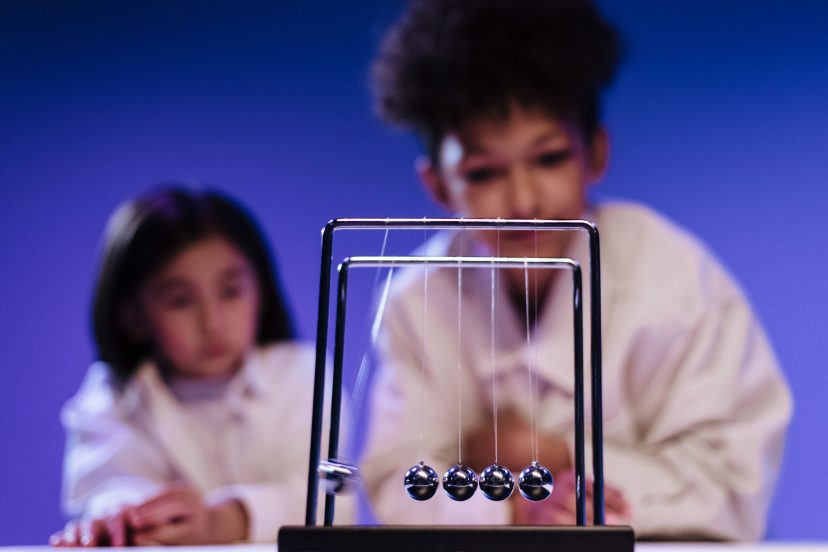
- Pendulum timing
- Simple machine projects
- Robotics activities
This is also a great age to connect physics with engineering and problem-solving.
Easy Physics Experiments At Home
Here are a few hands-on physics activities that work well for families, classrooms, or homeschool lessons.
Balloon Rocket
Tie string between two chairs. Thread a straw onto the string. Tape an inflated balloon to the straw, then release it.
Kids learn about air pressure, thrust, and motion.
Paper Airplane Test
Fold several paper airplane designs. Test which one flies farthest.
This introduces lift, drag, weight, and design thinking.
Magnet Hunt
Give your child a magnet and ask them to test safe household objects.
They learn that magnets attract some metals, but not everything shiny.
Spoon Sound Test
Tap spoons of different sizes against a cup or bowl.
Children notice pitch, vibration, and sound waves.
Make Space For Mistakes
A child’s first bridge may collapse. The balloon rocket may spin wildly. The paper airplane may fly directly into the dog’s water bowl.
That is okay.
Mistakes are not interruptions to learning. They are the learning.
When something fails, ask:
“What could we change next time?”
That one question teaches resilience, problem-solving, and engineering thinking. It also helps kids see science as something they can do, not something they must get right immediately.
Connect Physics With Robotics And Engineering
Physics becomes even more exciting when kids can build something that moves.
Robotics, simple machines, and engineering toys help children see how force, motion, energy, gears, wheels, and balance work together. If your child enjoys building, coding, or taking things apart just to see what happens, you can also explore these robot toys that build STEM skills for more hands-on learning ideas.
Robotics is especially helpful because it connects physics with real outcomes. A robot does not move because an adult said, “Trust me.” It moves because the child built, tested, adjusted, and improved it.
That is powerful.
Best Amazon Products For Physics For Kids
The right science toy can make Physics For Kids easier to explore, especially when you want guided activities without planning everything from scratch.
Learning Resources STEM Force and Motion Activity Set
This set focuses on force, motion, critical thinking, and hands-on building.
Features:
- Includes activity pieces for motion experiments
- Supports cause-and-effect learning
- Designed for classroom or home STEM activities
- Great for ages 5 and up
Best for: Younger kids who need a visual, hands-on way to understand pushing, pulling, speed, and movement.
Learning Resources STEM Simple Machines Activity Set
This kit introduces simple machines such as levers, pulleys, wheels, and screws.
Features:
- Hands-on engineering activities
- Activity cards for guided learning
- Helps kids understand how machines make work easier
- Good for small groups or homeschool lessons
Best for: Kids who love building, fixing, or asking how everyday tools work.
Learning Resources STEM Explorers Magnetworks Magnetic Science Set
This magnetic science set helps children explore attraction, repulsion, and magnetic force.
Features:
- Includes magnetism-based experiments
- Group-friendly design
- Activity guide included
- Good for ages 5–8
Best for: Curious younger learners who enjoy sensory science and visible “wow” moments.
Snap Circuits Jr. SC-100 Electronics Exploration Kit
This popular electronics kit introduces circuits through snap-together parts.
Features:
- Over 100 projects
- Full-color manual
- No soldering required
- Builds confidence with electricity and circuits
Best for: Kids ages 8+ who are ready for beginner electronics and structured STEM projects.
Teenii Electricity and Magnetism Kit for Kids
This kit combines circuits, electromagnetism, and hands-on physics experiments.
Features:
- 50-piece set
- Includes experiments like fruit battery and hand crank generator
- Comes with a full-color manual
- Encourages parent-child discovery
Best for: Older kids who want to explore electricity, magnets, and energy in a deeper way.
What Research Says About Early Physics Learning
Research supports what many parents and teachers already notice: children are naturally curious about how the physical world works.
The 2017 early STEM learning report from New America and the Joan Ganz Cooney Center explains that early STEM experiences matter because children begin forming ideas about science, technology, engineering, and math long before formal schooling becomes advanced.
Another useful source is a 2022 play-based physics learning in kindergarten study, which highlights how free play combined with thoughtful guidance can help children experience and recognize physical laws in a self-directed, action-oriented way.
In plain English: kids do not need to wait until middle school to “start physics.” They can begin with rolling, stacking, balancing, pushing, pulling, observing, and asking better questions.
How To Support Different Learning Styles
Every child approaches STEM activities differently.
Some kids want to touch everything immediately. Some want to watch first. Some ask twenty questions before breakfast. Some quietly test the same idea over and over.
Try offering physics activities in different ways:
- Visual learners may enjoy diagrams, videos, shadows, and color-coded materials.
- Hands-on learners may prefer building ramps, circuits, towers, and machines.
- Verbal learners may enjoy explaining what happened after each test.
- Creative learners may like turning experiments into stories or challenges.
- Social learners may enjoy team-based building projects.
You do not need to force one “correct” style. Give children several ways to enter the activity.
Simple Safety Tips For Kids’ Physics Activities
Physics play is usually safe, but it still needs common sense.
Keep these rules in mind:
- Supervise magnets, batteries, small parts, and electrical kits.
- Avoid experiments involving fire unless an adult fully controls the setup.
- Use age-appropriate tools.
- Read product instructions before starting.
- Keep tiny parts away from toddlers and pets.
- Test outdoor projects in open spaces.
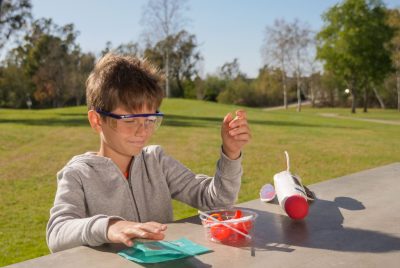
- Use safety goggles for messy or flying-object activities.
Also, teach kids that safety is part of being a scientist. Real scientists do not just ask, “Will this work?” They also ask, “Can we test this safely?”
How To Keep Kids Interested In Physics
The secret is not doing bigger, fancier experiments every time. The secret is letting children feel ownership.
Let them choose:
- Which object to test
- Which ramp height to use
- Which paper airplane design to try
- Which magnet prediction to make
- Which bridge design to build
- Which problem to solve next
You can also turn activities into friendly challenges:
- Can you build the tallest tower?
- Can you make the car travel farther?
- Can you design a slower parachute?
- Can you make a marble turn a corner?
- Can you build a bridge that holds five toy animals?
That little bit of playfulness keeps STEM learning from feeling like homework in disguise.
Common Mistakes To Avoid
When teaching Physics For Kids, adults sometimes overcomplicate things.
Try to avoid these mistakes:
- Explaining too much before the child explores
- Turning every activity into a quiz
- Expecting perfect results
- Choosing kits that are too advanced
- Correcting every wrong idea immediately
- Skipping the “what do you notice?” part
- Forgetting that play is productive
The goal is not to raise a tiny physicist overnight. The goal is to help a child feel curious, capable, and willing to experiment.
FAQs About Physics For Kids
What is the best age to start Physics For Kids?
You can start in preschool with simple activities like rolling balls, stacking blocks, playing with shadows, testing magnets, and exploring sink-or-float experiments. Keep it playful and sensory.
How do you explain physics to a child simply?
Explain physics as the science of how things move, fall, push, pull, spin, bounce, float, and make sound. Use real examples before introducing formal words.
What are easy physics experiments for kids at home?
Good starter experiments include balloon rockets, paper airplane tests, magnet hunts, ramp races, shadow play, spoon sound tests, and building towers with blocks or cups.
Are physics toys worth it for kids?
Yes, when they encourage open-ended exploration rather than one-time assembly. Look for kits that let kids build, test, adjust, and repeat experiments.
How can I make physics fun for a child who dislikes science?
Start with their interests. Use sports, cooking, cars, music, art, robots, or outdoor play. Once physics connects to something they already enjoy, it feels less like a subject and more like a discovery.