Gardening STEM Activity: Build Your Own Greenhouse
We may earn a commission for purchases made using our links. Please see our disclosure to learn more.
A homemade greenhouse turns a few seeds, a clear cover, and a sunny spot into a science lab and gives kids a reason to come back tomorrow to see what changed. This Gardening STEM Activity helps children build a greenhouse, plant seeds, measure growth, compare conditions, and improve their design as they learn. You do not need a backyard or expensive equipment; a windowsill, table, or classroom shelf can work. This guide covers the materials, building steps, useful variables to test, products that can simplify the project, and research-backed ways to connect growing plants with science, engineering, and math.
Affiliate disclosure: This article may contain affiliate links. If you make a purchase through one of these links, we may earn a commission at no extra cost to you.
Why a Gardening STEM Activity Works So Well
Plants change slowly enough for children to observe cause and effect, yet quickly enough to stay interesting. A sprout leaning toward light or droplets on a lid naturally leads to “Why did that happen?”
That question turns gardening into STEM. Children predict, measure, compare, redesign, and explain. Science appears in germination, engineering in the structure, math in graphs, and technology in simple measurement tools.
What Kids Learn by Building a Greenhouse
A mini greenhouse lets children explore how water, light, temperature, airflow, and growing media influence plants. They can count sprouts, notice condensation, and compare growth.
The structure also creates an engineering problem: the cover should admit light, stay stable, and allow airflow. If the first design gets too wet or tips over, kids can use that evidence to redesign and test again.
Materials You Need for a DIY Mini Greenhouse
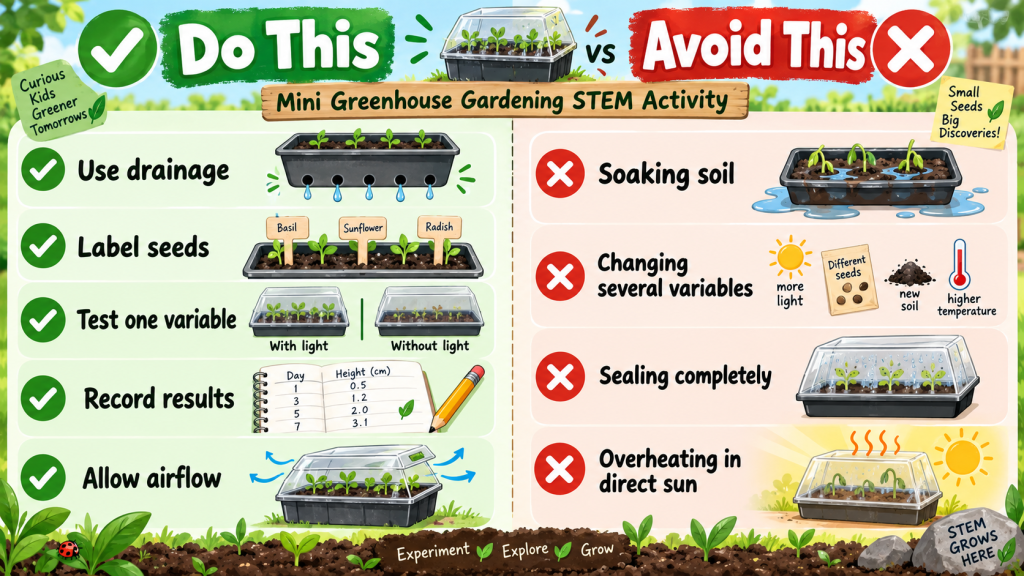
Gather a planting tray or small pots with drainage, sterile seed-starting mix, seeds, water, labels, and a clear cover. A transparent food container, humidity dome, or supported clear bag can work.
Add a ruler and notebook; older learners can use a thermometer-hygrometer. Adults should handle cutting or drainage holes. Set everything on a waterproof tray and skip improvised heat sources.
How to Build Your Greenhouse Step by Step
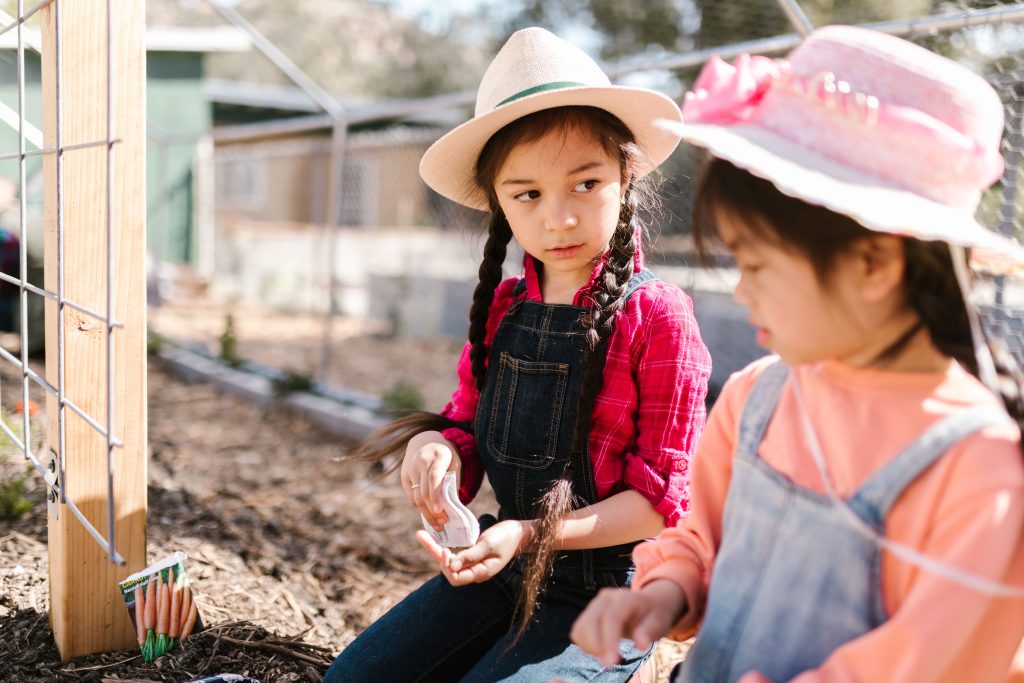
Fill cells or pots with damp seed-starting mix. Plant at the packet’s recommended depth, label each group, and mist gently. Place the clear cover over the tray without letting it touch the soil.
Leave a small vent. Put the greenhouse in suitable light without intense direct-sun overheating. Record the setup date, check daily, and increase airflow once seedlings emerge.
Choose Seeds That Make the Experiment Easier
For a first Gardening STEM Activity, pick seeds that germinate relatively quickly and are easy to handle. Beans, peas, radishes, lettuce, basil, and some flowers can work, though timing varies.
One seed type makes comparisons cleaner. If children want several varieties, make that the question: “Which seed sprouts first under the same conditions?” Follow each packet for planting depth, temperature, and light.
Turn the Greenhouse Into a Real STEM Investigation
Change one factor while keeping the others consistent. Compare two light levels, vent settings, or watering amounts. Changing seed type, water, soil, and light together makes the result hard to interpret.
Write a question and prediction first, then choose evidence that can answer it. If your child is ready for a fair test, these scientific method experiments for kids show how to frame a question, hypothesis, and simple data log.
A Gardening STEM Activity becomes stronger when children can explain what happened and point to evidence.
What to Measure and Record
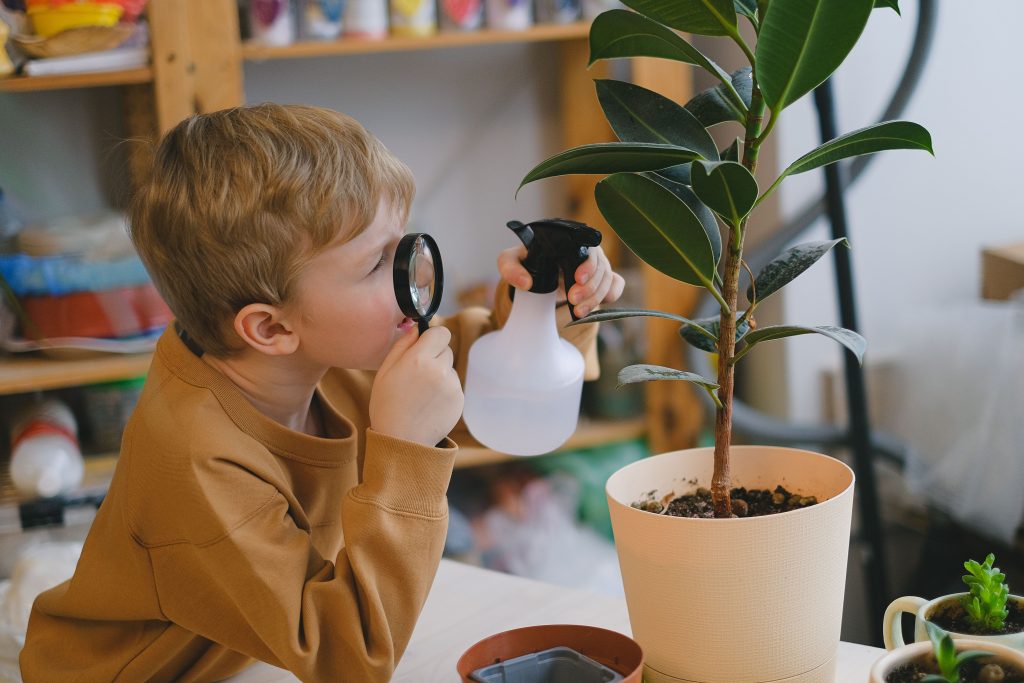
Choose two or three measurements: germination count, seedling height, leaf count, temperature, or days to first sprout. Measure at roughly the same time each day.
Younger kids can draw or photograph plants; older learners can calculate averages, graph height, or compare germination percentages. Real plant data are rarely tidy. Look for patterns rather than expecting identical seedlings.
Control Light, Water, Temperature, and Airflow
A clear cover can reduce moisture loss during germination, but constantly wet media and stale air create problems. Drainage and ventilation matter.
For a fair Gardening STEM Activity, choose one variable and hold the others steady. When testing light, keep seed type, growing mix, container size, and watering consistent. Monitor temperature too: a clear container near strong sun can warm quickly.
Recommended Products for a Gardening STEM Activity
A kit is optional, but these tools can reduce setup time or improve measurement for different learners.
| Product | Best for | Useful feature | Consideration |
| GooingTop LED Grow Light | Low-light homes | 6000K full-spectrum clip light | Needs powered setup and careful placement |
| Gardzen 5-Set Seed Starter Tray Kits | Groups and comparisons | Vented clear domes | Needs more table space |
| Creativity for Kids Grow ‘N Glow Terrarium Kit | Younger creative learners | Planting plus craft elements | Less suited to controlled trials |
| Burpee SuperSeed 36-Cell Reusable Seed Starting Tray | Reusable DIY builds | Organized reusable cells | Clear cover is separate |
| TempPro TP50 Digital Hygrometer | Data-focused learners | Temperature and humidity data | Keep away from water |
GooingTop LED Grow Light,6000K Full Spectrum Clip Plant Growing Lamp with White Red LEDs for Indoor Plants,5-Level Dimmable,Auto On Off Timing 4 8 12Hrs
Best for: Low-light homes and consistent supplemental light
This clip-on grow light uses 6000K full-spectrum white and red LEDs, five dimming levels, and automatic 4-, 8-, or 12-hour timing. It suits apartments, classrooms, or winter setups where window light is inconsistent. The timer makes repeated conditions easier to manage. Because it is an electrical light, an adult should position it and follow the product’s placement and operating instructions.
Gardzen 5-Set Seed Starter Tray Kits, Durable Plant Germination Trays with Humidity Vented Domes and Bases, Ideal for Seed Starting, Indoor Gardening, and Greenhouse (Total 200 Cells)
Best for: Classroom groups and side-by-side trials
Five 40-cell trays with clear vented humidity domes make this set useful for multiple test groups. The adjustable vents provide an obvious variable children can change and observe. Its 200-cell capacity is generous for classrooms or repeat projects, although the full set may take more space than a small home activity requires.
Creativity for Kids Grow ‘N Glow Terrarium Kit – Educational Science Kits | Screen Free Summer Fun Activities | Gifts for Boys and Girls | Craft and STEM Projects (Ages 6+)
Best for: Younger kids who like art with science
This compact kit combines a plastic terrarium jar, growing materials, chia and wheatgrass seeds, and decorative pieces. It offers an inviting first plant project for kids who enjoy making as much as measuring. Because the activity emphasizes creating and observing a mini ecosystem, it is better for introductory exploration than rigorous side-by-side variable testing.
Burpee SuperSeed Seed Starting Tray | 36 Cell Reusable Seed Starter Tray | for Starting Vegetable, Flower & Herb Seeds | Indoor Grow Kit for Plant Seedlings | for Germination Success
Best for: Reusable DIY greenhouse bases
The 36-cell reusable tray creates an organized base for several planting groups, making labels and treatments easier to track. Flexible cells are designed to help release seedlings for transplanting. It does not include the clear greenhouse cover needed for this project, so pair it with a separate transparent dome or a safely supported DIY cover.
TempPro TP50 Digital Hygrometer Indoor Thermometer with Max/Min Records | Room Thermometer and Humidity Monitor with Large LCD Display Humidity Meter for Baby (Previously ThermoPro)
Best for: Older kids who want quantitative data
The TP50 adds temperature and relative-humidity readings to a Gardening STEM Activity, so learners can compare numbers instead of relying on “warm” or “humid.” Max/min records also support discussions about changing conditions during the day. It is a room-monitoring tool rather than a waterproof plant sensor, so keep it dry and away from watering.
What Research Says About a Gardening STEM Activity
A greenhouse project supports real science learning because kids can test how light, water, temperature, and airflow affect plant growth. The Next Generation Science Standards encourage students to investigate plant needs while changing one variable at a time.
For better results, University of Illinois Extension recommends seed-starting mix, good drainage, and temporary covers during germination. University of Minnesota Extension also emphasizes steady moisture, suitable warmth, and bright light after seedlings emerge.
Research published in the International Journal of STEM Education also found that positive garden-based learning experiences were associated with stronger engagement, science learning, and science identity.
Common Greenhouse Problems and Simple Fixes
If seeds do not sprout, check the packet first. Planting depth, temperature, old seed, or soggy mix may be responsible. If the surface dries quickly, mist carefully.
Tall, thin seedlings often need stronger light. Persistent heavy condensation suggests more ventilation may help. If mold appears, review moisture, cleanliness, and airflow. A dripping sealed container is not automatically healthier.
Ways to Adapt the Activity by Age
For ages five to seven, keep the Gardening STEM Activity visual: plant, count sprouts, draw leaves, and compare “more” and “less.”
For ages eight to eleven, add a hypothesis, measurements, one controlled variable, and a graph. Older learners can calculate germination percentages or averages, then redesign the greenhouse from their data. The same project grows in difficulty by changing the questions and measurements.
Extend the Project With Engineering and Math
Give the greenhouse a new engineering brief: improve airflow, make the cover taller, or create a gentler watering method. Limit materials so children must make tradeoffs.
Then add math. Measure the footprint, graph plant height, calculate average growth, or compare germination rates. The Gardening STEM Activity can continue after sprouting as children use results to redesign and test again.
Gardening STEM Activity FAQs
How long does a Gardening STEM Activity greenhouse take to show results?
It depends on the seed and growing conditions. Some fast-germinating seeds may sprout within several days, while others take longer. Check the packet rather than promising a fixed date. For learning purposes, observe the greenhouse for at least one to two weeks so children can record germination and early growth.
Does a mini greenhouse need direct sunlight?
Not necessarily. Seeds and seedlings have species-specific light needs, and a clear enclosed container can overheat in strong direct sun. Follow the seed packet, monitor temperature, and provide bright appropriate light after germination. If you use a grow light, follow its instructions for distance and timing.
Can I make this Gardening STEM Activity without buying a kit?
Yes. A container with drainage, seed-starting mix, seeds, a clear supported cover, water, labels, and a notebook are enough. Kits mainly save setup time or add structured experiments. A DIY version can create extra engineering thinking because children must decide how to support the cover, vent it, and keep the tray stable.
What is the best variable for kids to test first?
Light or ventilation is easier to understand than changing several care factors together. Choose one variable, then keep the seed type, container, growing medium, and measurement schedule as consistent as practical. For younger children, comparing two vent settings can create a simple discussion about moisture and airflow.
How do I make the greenhouse project feel like STEM instead of gardening only?
Add a question, prediction, controlled comparison, measurement, and redesign step. Gardening supplies the living system, but STEM comes from investigating it. Ask children to explain what changed, show evidence in a table or graph, and redesign one part of the greenhouse based on what they observed.
Conclusion: Make Your Gardening STEM Activity a Living Experiment
The best greenhouse project is not the fanciest one. It is the one that lets a child build something, notice change, collect evidence, and make a better decision the second time. Start with a simple tray and clear cover, choose manageable seeds, control one variable, and keep measurements easy enough to repeat.
Homes with inconsistent natural light may benefit from the GooingTop grow light, while a Burpee SuperSeed tray makes a reusable base for a more open-ended build. Either way, treat the plants as an ongoing investigation rather than decoration. A Gardening STEM Activity works best when children can ask, “What should we change next?” and then have enough evidence to test the answer.