Best Children’s Drone for Young Beginners
We may earn a commission for purchases made using our links. Please see our disclosure to learn more.
Finding the best children’s drone can feel a little like choosing a first bicycle. You want something exciting enough to make your child light up, but safe and simple enough that the first ride does not end in tears, tangled propellers, or a dramatic crash into the houseplant.
A good kids drone is more than a toy. It can turn your living room, backyard, or classroom into a mini STEM lab. Your child learns cause and effect, hand-eye coordination, problem-solving, spatial thinking, and even basic engineering without feeling like they are doing “schoolwork.”
In this guide, you’ll learn what to look for, which Amazon drones are worth considering, how drones support STEM learning, and how to choose a beginner drone for kids that fits your child’s age, confidence, and curiosity.
Affiliate disclosure: As an Amazon Associate, I may earn from qualifying purchases at no extra cost to you.
Why the Best Children’s Drone Fits STEM Learning
The best children’s drone does something special: it makes science visible.
Instead of reading about lift, thrust, balance, or motion, kids can watch those ideas come alive. They press a button, the drone rises, wobbles, corrects itself, flips, or drifts. Suddenly, physics is not a dry textbook page. It is buzzing around the room like a tiny robot bee with big main-character energy.
For kids who love building, tinkering, or asking “why did that happen?”, a drone can become an educational drone toy that teaches through play. And for kids who usually say science is “boring,” a mini drone can be the sneaky little bridge that changes their mind.
Quick Buying Snapshot for Busy Parents
Before we get into the details, here is the quick version.
Look for a kids drone with:
- Propeller guards
- Altitude hold
- One-key takeoff and landing
- Headless mode
- Multiple speed settings
- Extra batteries
- Durable, lightweight build
- Indoor-friendly size
For younger beginners, skip the expensive camera drone at first. Start with a simple indoor drone for kids. Think “training wheels,” not “Hollywood aerial film crew.”
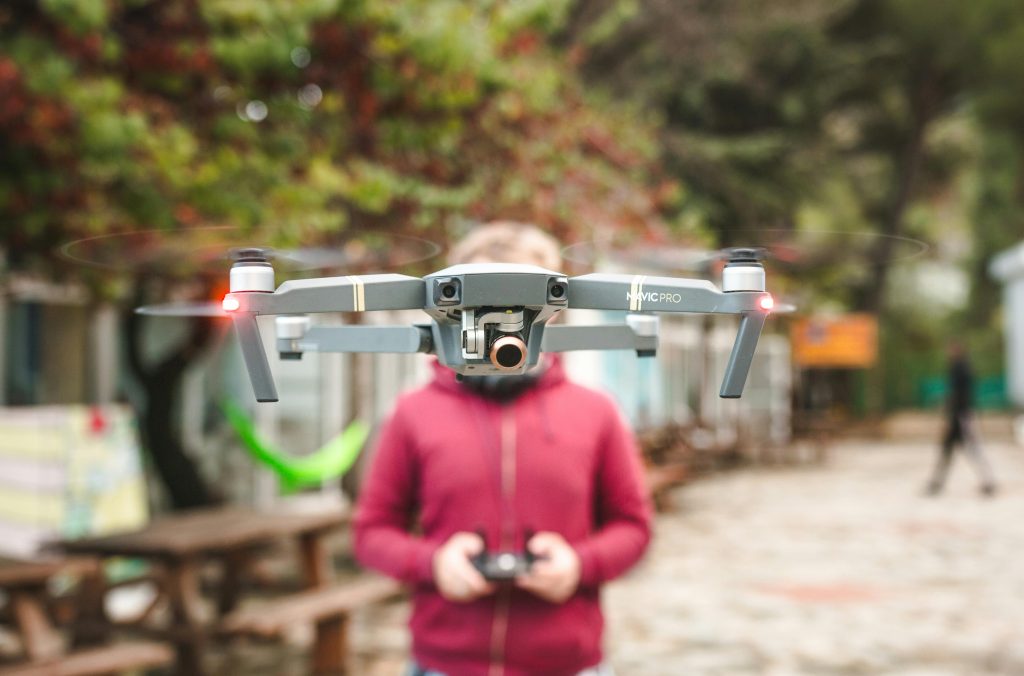
What Makes the Best Children’s Drone Different?
The best children’s drone is not always the flashiest one. In fact, the fanciest drone may be the worst first drone for a child.
A beginner-friendly RC drone for kids should be easy to control, forgiving when mistakes happen, and durable enough to survive beginner crashes. Because yes, crashes will happen. That is part of the learning.
Key features to prioritize
Look for:
- Altitude hold: Helps the drone hover without constant throttle control.
- Headless mode: Makes direction easier for beginners.
- One-key launch/landing: Reduces panic during takeoff and landing.
- Propeller protection: Helps protect fingers, walls, pets, and furniture.
- Low-speed mode: Gives kids time to react.
A beginner drone for kids should build confidence first. Speed can come later.
Match the Drone to Your Child’s Age and Confidence
Not every child needs the same drone. Some kids are careful and patient. Others treat every remote control like they are piloting a spaceship through an asteroid field.
For ages 6–8, choose a very small indoor drone with full propeller guards and simple controls. For ages 8–12, you can consider drones with flips, LED lights, and beginner camera features. For teens, a drone for kids with camera features may feel more engaging because they can capture photos, videos, and creative flight paths.
Also, think about temperament. A cautious child may enjoy a stable hover drone. A high-energy child may love stunt features, but only after learning basic control.
Safety Features That Matter More Than Fancy Tricks
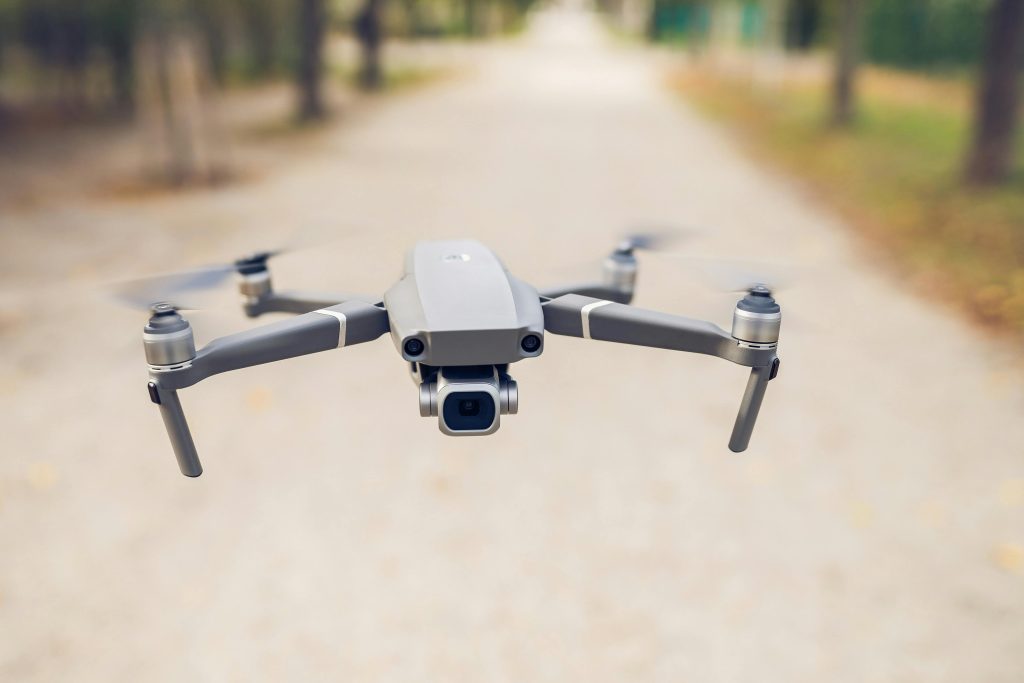
Drone safety for kids matters more than flips, lights, or camera specs.
If your child will fly outdoors in the United States, check current FAA guidance first. The FAA says recreational flyers must complete The Recreational UAS Safety Test, known as TRUST, and carry proof of completion while flying. The FAA also separates recreational drone rules from non-recreational operations, so parents should know which rules apply before outdoor flights.
For most children, the safest first step is indoor flying in an open room, away from faces, pets, fragile decorations, ceiling fans, and younger siblings who like to “help.”
Simple safety rules for kids
- Fly below eye level indoors.
- Keep fingers away from spinning propellers.
- Stop flying when the battery gets low.
- Never fly near roads, crowds, or animals.
- Let an adult supervise outdoor flights.
Not glamorous, I know. But neither is explaining to Grandma why her vase became part of a “STEM experiment.”
STEM Skills Kids Can Practice With a Drone
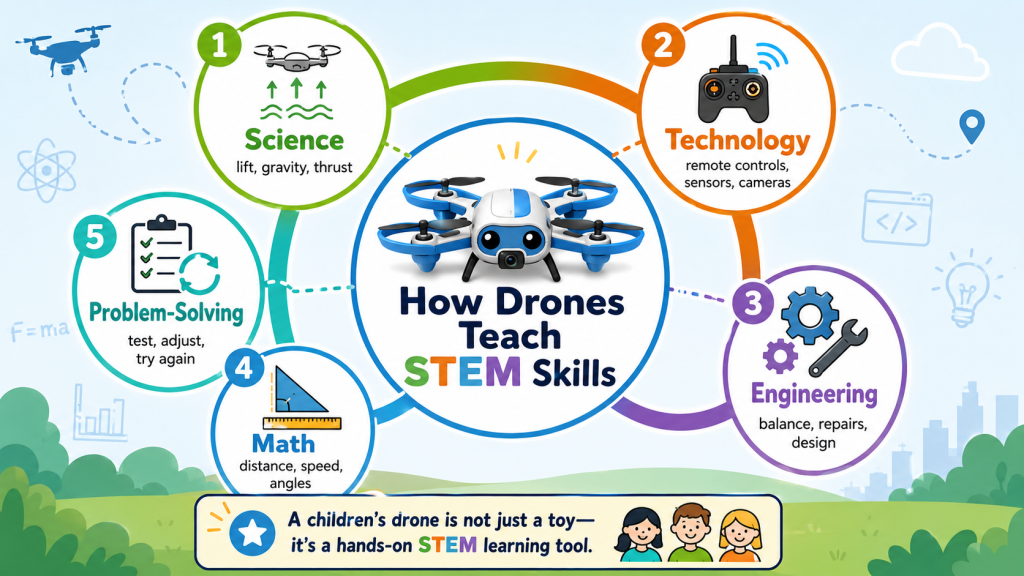
The best children’s drone can teach more than flying. It can support real STEM learning in a relaxed, playful way.
Children can explore:
- Physics: lift, gravity, drag, thrust, and motion
- Math: distance, time, angles, speed, and measurement
- Engineering: design, balance, crashes, repairs, and iteration
- Technology: remote signals, motors, sensors, and cameras
- Problem-solving: testing, adjusting, and trying again
You can also pair drone play with other hands-on activities. For example, if you want easy learning stations beyond drones, this guide to creative STEM bin ideas for hands-on learning can help you build simple activity setups for curious kids.
5 Picks for the Best Children’s Drone
Below are five drone options that fit different beginner needs. Product availability, prices, and features can change, so check each listing before buying or publishing.
1. Holy Stone HS210 Mini Drone for Kids and Beginners
The Holy Stone HS210 Mini Drone for Kids and Beginners is a strong pick for first-time flyers. Amazon’s listing describes it as an indoor RC nano quadcopter with auto hovering, 3D flips, headless mode, and three batteries. The product Q&A also notes that the HS210 is designed for kids aged 8 to 12 and beginners, with simple controls and stable flight performance.
Features:
- Auto hovering
- Headless mode
- 3D flips
- Three batteries
- Indoor-friendly size
Best for: Kids who need a simple, durable mini drone before trying camera drones.
2. DEERC D20 Mini Drone for Kids with 1080P HD FPV Camera
The DEERC D20 Mini Drone for Kids is a better fit if your child wants a drone for kids with camera features. The listing highlights a 1080P HD FPV camera, altitude hold, one-key start and stop, three speed modes, voice control, gesture control, waypoints, 360° flips, and two modular batteries.
Features:
- 1080P HD FPV camera
- Altitude hold
- Voice and gesture control
- One-key takeoff and landing
- Two modular batteries
Best for: Kids who want to experiment with photos, videos, and beginner flight paths.
3. HASAKEE Q9s Drone for Kids
The Q9s Drone for Kids is a colorful RC drone for kids with full propeller protection. Amazon’s listing says it includes headless mode, altitude hold, three speeds, one-button takeoff and landing, and protective rings around the propellers. It also uses lights, which can help kids track the drone’s direction.
Features:
- Full propeller guards
- Altitude hold
- Headless mode
- Three speed modes
- LED lighting
Best for: Younger beginners who need extra protection and visibility.
4. TOMZON A24 Mini Drone for Kids with Battle Mode
The TOMZON A24 Mini Drone for Kids leans into fun. Amazon’s listing mentions battle mode, throw-to-go, high-speed rotation, self-spin, 3D flip, altitude hold, and beginner-friendly indoor flying features.
Features:
- Battle mode
- Throw-to-go launch
- Altitude hold
- 3D flips
- Self-spin tricks
Best for: Kids who love active play, friendly competitions, and stunt-style flying.
5. Ameta Drones for Kids Adults with 1080P HD FPV Camera
The Ameta Drone for Kids and Adults is another camera-friendly option. Amazon describes it as an RC drone with a 1080P HD FPV camera, LED light, full propeller protection, two batteries, long flight time, and easy flying controls. The listing also notes a manufacturer minimum age of 14, so this one is better for older kids or teens with adult supervision.
Features:
- 1080P HD FPV camera
- LED light
- Full propeller protection
- Two batteries
- Remote control
Best for: Older kids or teens who want camera features with protective design.
Product Comparison: Which Drone Fits Which Child?
Here is the simplest way to choose.
For a first drone, pick the Holy Stone HS210. It is small, approachable, and beginner-friendly. For camera fun, choose the DEERC D20. For younger kids who need extra protection, the Q9s is a smart option. For energetic kids who love games and tricks, the TOMZON A24 feels more playful. For older children or teens, the Ameta drone offers a more grown-up camera drone experience.
The best children’s drone is the one your child can actually enjoy without feeling overwhelmed.
Research-Backed Reasons Drones Support STEM Learning
A 2024 systematic review in Computers & Education found that drone-integrated education has been used across disciplines, with STEM standing out strongly. The review also noted that experiential and project-based learning are common approaches in drone-based STEM education, and that teamwork and hands-on activities often support learning experiences. You can read the study here: drone-integrated STEM education research review.
Another peer-reviewed study published in Informatics in Education found that drone-based workshops helped students understand, build, and interpret STEM content. The researchers concluded that using drones as a pedagogical technology showed a significant relationship with meaningful learning in STEM areas. You can review it here: drones as pedagogical technology in STEM disciplines.
The big takeaway? Drones work best when kids are not just flying randomly. They learn more when they predict, test, measure, discuss, and improve.
Turn Drone Time Into Mini STEM Lessons
You do not need a full classroom plan. Try simple challenges.
Ask your child:
- Can you fly from one chair to another in a straight line?
- How long does one battery last?
- What happens when you change speed mode?
- Can you create a square flight path?
- Why does the drone drift near a fan or open window?
These tiny experiments build observation skills. They also teach kids that mistakes are data, not failure. That lesson alone is worth a lot.
Indoor vs Outdoor Drone Flying
For beginners, indoor flying is usually better. You control the space, the wind, the noise, and the surprises.
An indoor drone for kids should be small, lightweight, and protected by propeller guards. Outdoor drones need more power, better stability, and more awareness of safety rules.
Start indoors. Move outdoors only when your child can launch, hover, turn, land, and stop calmly. Calm is the keyword. Tiny panic flights are how drones end up in bushes with mysterious confidence.
Battery Life, Durability, and Spare Parts
Most kids drones do not fly for an hour. Many fly for around 7–10 minutes per battery, depending on the model and flying style. That is why extra batteries matter.
Look for:
- Modular batteries
- Spare propellers
- Easy charging
- Crash-resistant frames
- Replacement parts
A drone with three short batteries may be more useful than a drone with one slightly longer battery. Kids do not love waiting. Honestly, adults do not either.
Common Mistakes to Avoid Before Buying
The biggest mistake is buying too much drone too soon.
Avoid:
- Expensive camera drones for total beginners
- Outdoor-only drones for young kids
- Drones with exposed propellers
- Models without spare batteries
- Complicated controls for first-time flyers
Also, do not choose only by age label. A careful 7-year-old may handle a beginner drone beautifully, while an impulsive 11-year-old may need more supervision. You know your child best.
FAQs About the Best Children’s Drone
What is the best children’s drone for beginners?
The best children’s drone for beginners is usually a small indoor drone with propeller guards, altitude hold, headless mode, and one-key takeoff and landing. The Holy Stone HS210 is a strong beginner-friendly option.
Is a drone good for STEM learning?
Yes, a drone can support STEM learning when kids use it for simple experiments. It can teach motion, measurement, problem-solving, engineering thinking, and cause and effect through hands-on play.
What age is best for a kids drone?
Many beginner drones are aimed at kids around 8 and up, but age is not the only factor. Consider your child’s patience, coordination, and ability to follow safety rules.
Should I buy a camera drone for kids?
A camera drone can be fun for older kids, but younger beginners may do better with a simple mini drone first. Once they can fly safely, camera features become more useful.
Are drones safe for children?
Drones can be safe with adult supervision, propeller guards, open space, and clear rules. Start indoors, avoid flying near faces or pets, and check outdoor drone rules before flying outside.
Final Thoughts: Help Curiosity Take Flight
The best children’s drone is not just the one with the coolest flips or brightest lights. It is the one that helps your child feel capable, curious, and excited to try again after a wobbly landing.
Start simple. Choose safety first. Turn flight time into little experiments. And remember, every crash can become a tiny engineering lesson if you respond with, “Interesting. What do you think happened?”
That is the heart of STEM learning. Not perfect results. Just curiosity with wings.