Best Toddler Puzzles for Curious Little Minds
We may earn a commission for purchases made using our links. Please see our disclosure to learn more.
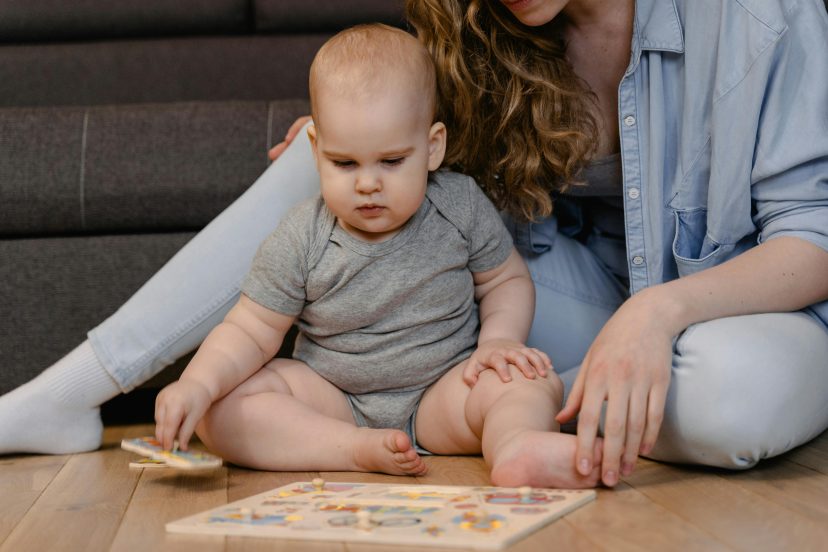
You know that moment when your toddler wants to “do it myself,” but also gets wildly offended when the triangle does not fit in the circle? That is exactly why toddler puzzles are such a sweet spot. They feel like play, but under the surface, they are doing real work: building patience, fine motor control, early logic, and the first tiny sparks of STEM learning. The American Academy of Pediatrics points to puzzles as classic toys that support problem-solving, fine motor skills, language, brain development, and even early math.
This guide will help you choose the right toddler puzzles for your child’s age, attention span, and personality. You will also see which types are best for beginners, which ones grow into early STEM skills, and which Amazon picks are actually worth a spot on your shelf.
Affiliate note: This article includes product suggestions for convenience, and availability on Amazon can change.
Why toddler puzzles matter for STEM learning
STEM learning at the toddler stage does not need to look like a mini science lab in your kitchen. At this age, STEM is much simpler than that. It looks like noticing shapes, testing where a piece belongs, comparing sizes, spotting patterns, and trying again after something does not work.
That is why toddler puzzles are such a natural fit. They quietly introduce the foundations of science, technology, engineering, and math without making play feel like school. A child turns a piece, tests a theory, adjusts, and succeeds. That is problem-solving in sneakers.
What toddler puzzles actually teach
A good puzzle is doing more than keeping your child busy while you reheat your coffee for the third time.
It helps your toddler learn how to:
- match shapes and pictures
- recognize patterns
- understand part-to-whole relationships
- practice trial and error
- build attention span
- strengthen hand-eye coordination
Simple jigsaw puzzles also help with finger strength, perseverance, and problem-solving, according to Queensland’s early learning guidance.
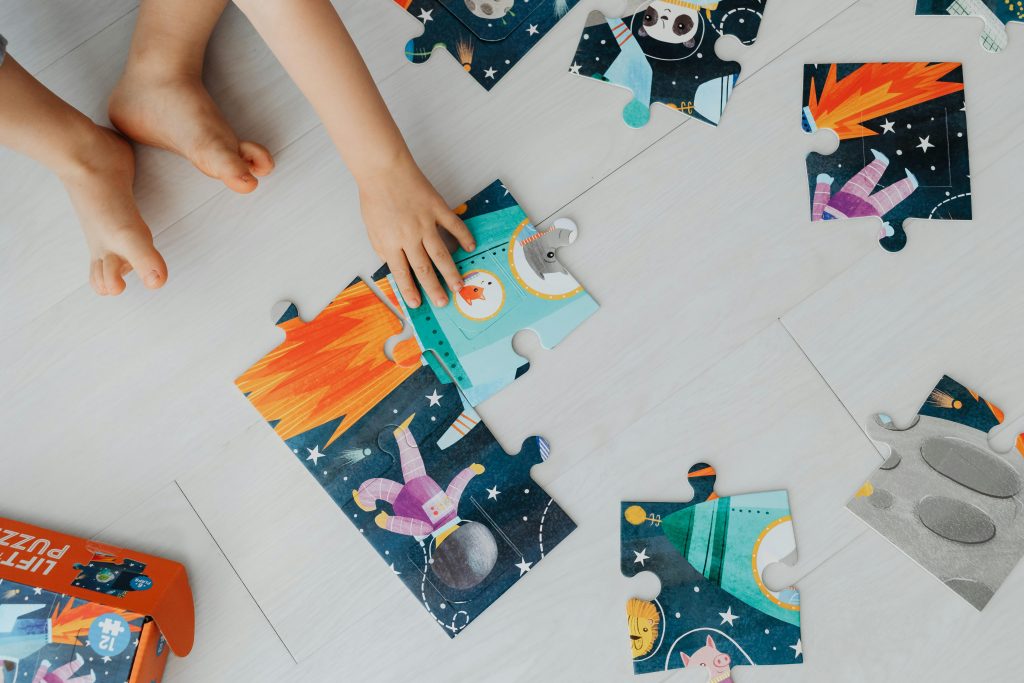
Skills toddlers build piece by piece
One of the best things about toddler puzzles is that they stack skills without feeling heavy.
Fine motor skills: Little fingers pinch, lift, rotate, and place pieces. That is excellent practice for later tasks like drawing, buttoning, and using utensils.
Visual perception: Toddlers learn to notice similarities, differences, edges, and orientation. They begin to see that a piece is not “wrong,” just upside down.
Early math thinking: Numbers, matching, sequencing, and shape recognition all live inside puzzle play. AAP guidance specifically notes that puzzles can build early math skills too.
Emotional resilience: And maybe most importantly, puzzles teach kids how to stay with a challenge a little longer.
How to choose the right first puzzle
Not every toddler needs the same starting line.
If your child is just beginning, look for:
- chunky or knobbed pieces
- 4 to 8 pieces max
- clear pictures
- sturdy wood construction
- familiar themes like animals, vehicles, or shapes
If your child already breezes through beginner boards, move up slowly to peg puzzles, then simple jigsaws, then matching or tangram-style options.
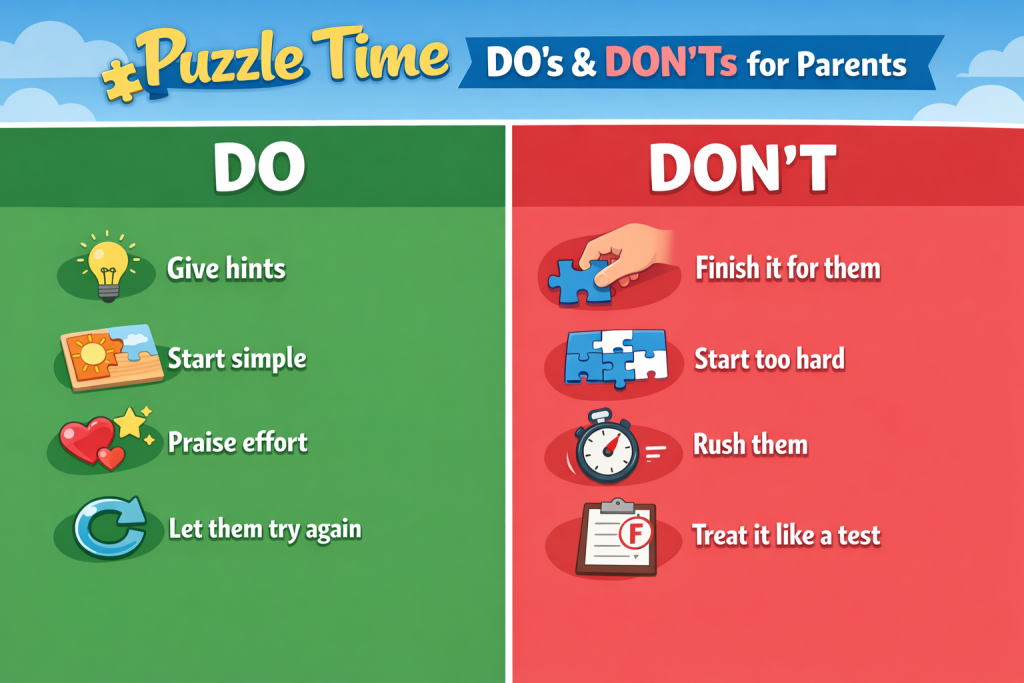
The point is not to impress anybody. The goal is “challenging, but still winnable.” That sweet spot keeps puzzle time fun.
Best types of toddler puzzles for different ages
Here is a simple way to think about it.
Ages 1–2: Jumbo knob puzzles, chunky puzzles, and simple shape boards work best.
Ages 2–3: Peg puzzles, sound puzzles, number boards, and picture matching puzzles become more interesting.
Ages 3–4: Multi-pack jigsaws, alphabet boards, and early pattern puzzles start to make sense.
Ages 4+: More complex jigsaws, tangrams, logic boards, and sequencing puzzles can stretch problem-solving further.
That gradual climb matters because starting too hard can make a child feel like the puzzle is the boss. Nobody likes that relationship.
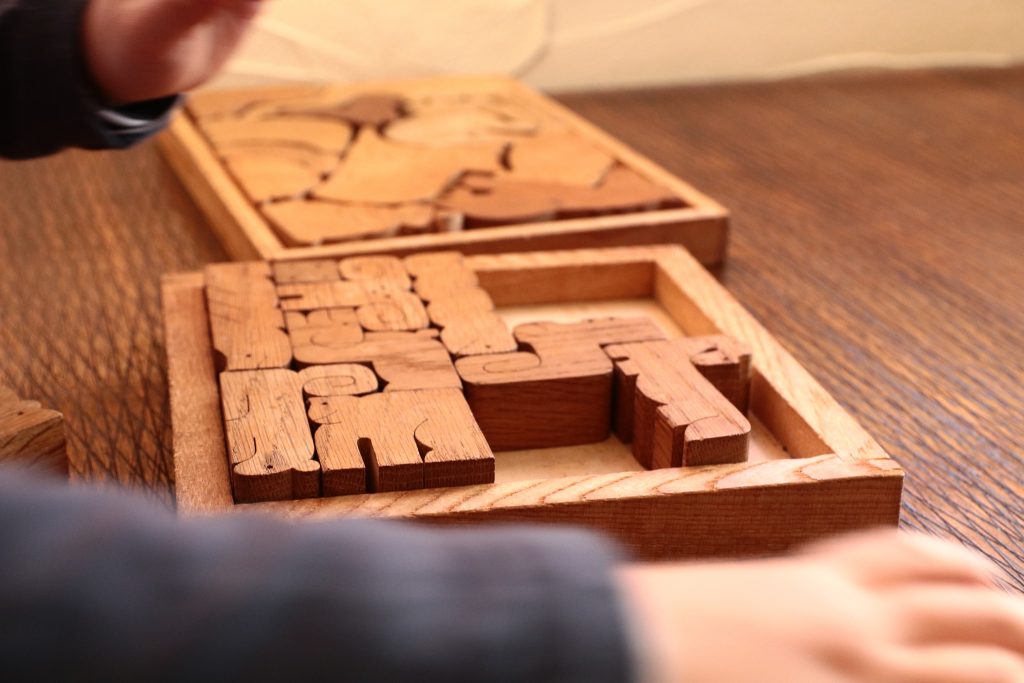
How to help without taking over
This part is sneaky hard for grown-ups.
When your toddler struggles, it is tempting to grab the piece and finish the job in two seconds. But the learning lives in the pause. Instead, try:
- “Turn it a little.”
- “What do you notice?”
- “Does the picture match here?”
- “Let’s find the straight edge.”
HealthyChildren.org also encourages “scaffolding,” which basically means giving hints instead of hijacking the activity. It is support, not a rescue mission.
Turning puzzle time into STEM time
You do not need to announce, “Welcome to the STEM block of our afternoon.”
Just layer in tiny questions:
- Which piece is bigger?
- What happens if we flip it?
- How many animals do you see?
- Which shape has more sides?
- Can you sort pieces by color first?
That kind of language turns toddler puzzles into early engineering and math practice. It also helps your child connect play with thinking, which is a lovely habit to build early.
Why repetition helps young brains
Adults get bored with the same puzzle fast. Toddlers usually do the opposite.
They want the cow puzzle again. And again. And somehow again.
That repetition is not wasted time. Repeating the same challenge helps young children strengthen memory, planning, and confidence. The familiarity frees up brain space for speed, strategy, and independence. Queensland’s early learning guidance notes that puzzles support memory and the ability to plan, test ideas, and solve problems.
So no, you are not failing if your child loves one puzzle more than the entire toy basket. You may actually have found a winner.
When to size up
You will know it is time for a harder puzzle when your child:
- finishes quickly without much thought
- stops seeming interested
- starts using the pieces more like props than a challenge
- wants “bigger kid” activities
That is usually your cue to add one new wrinkle: more pieces, a less obvious image, numbers, letters, or a more open-ended design.
Small jumps work better than giant leaps.
5 toddler puzzles worth buying on Amazon
1) Melissa & Doug Farm Animals Jumbo Knob Puzzle
This is the classic “first puzzle” option. The oversized knobs make gripping easier for beginners, and the farm theme is familiar enough that toddlers can connect the picture to real words quickly. Amazon search results also show strong purchase activity for this one.
Best for: early beginners, ages 1+
Why it works: big pieces, simple matching, low frustration
Great if you want: a starter puzzle that feels easy to win
2) Melissa & Doug Vehicles Sound Puzzle
If your toddler loves things that beep, rumble, and generally make the house louder, this one is a hit. It uses light-activated vehicle sounds and encourages matching, listening, and hand-eye coordination. It also shows 2K+ bought in the past month on Amazon’s visible listing data.
Best for: vehicle-loving toddlers, ages 2+
Features: 8 wooden peg pieces, sound effects, picture matching
Great if you want: a puzzle that feels extra interactive
3) Melissa & Doug Lift & See Numbers Wooden Peg Puzzle
This is a smart bridge between puzzle play and early math. Kids match the pieces, see pictures underneath, and start connecting number symbols with counting in a hands-on way. Amazon’s product page says it promotes number recognition, counting, and early math skills.
Best for: toddlers ready for number exposure
Features: 10 pieces, easy-grasp pegs, counting support
Great if you want: math learning without worksheets
4) Melissa & Doug Lift & See Alphabet Wooden Peg Puzzle
This one does the same kind of hands-on learning, but with letters and pre-reading support. The pictures under each piece make it easier for children to connect letters with familiar words and sounds. It is a nice next step for older toddlers and preschoolers.
Best for: ages 3–5
Features: 26 pieces, picture cues, letter recognition support
Great if you want: a puzzle that grows into literacy skills
5) Coogam Wooden Blocks Puzzle Brain Teasers Toy
This one leans more toward pattern-building and logic than a traditional peg board. It is better for older toddlers or preschoolers who are ready for open-ended shape play. Amazon labels it Amazon’s Choice, shows 2K+ bought in the past month, and highlights shape recognition, creativity, and hand-eye coordination.
Best for: older toddlers, preschoolers, and STEM-style play
Features: 40 pieces, tangram-style building, pattern challenges
Great if you want: a puzzle that stretches thinking beyond matching
What to look for before you buy
Before you hit “Add to Cart,” check five things:
- Piece size: Bigger is better for beginners.
- Material: Wood tends to last longer and feels steadier in little hands.
- Theme: Toddlers engage longer with topics they already love.
- Difficulty: Too easy gets ignored. Too hard gets launched across the room.
- Replay value: Look for puzzles that still feel fun after the first success.
Also, if you are buying for shared family use, storage matters more than most people realize. Boxes with compartments are sanity savers.
What the research says about puzzle play
The most encouraging part? Puzzle play is not just “cute and educational.” There is real research behind it.
A 2011 longitudinal study on early puzzle play found that children who engaged in puzzles between ages 2 and 4 performed better on a later spatial transformation task, even after controlling for parent education, income, and language input. You can read the early puzzle play and spatial skill study.
Even more recent, a 2026 randomized controlled trial on preschool play found that puzzle play was linked with significant and sustained improvements in executive-function areas like inhibitory control and cognitive flexibility, with puzzle-play benefits for working memory showing up at follow-up. Here is the preschool puzzle play and executive function trial.
That does not mean every puzzle automatically turns your toddler into a mini engineer. It does mean puzzle play is a genuinely worthwhile way to support thinking skills during early childhood.
Easy ways to keep puzzle time fresh
If the same puzzle starts feeling stale, try small changes instead of buying ten new toys.
You can:
- rotate puzzles weekly
- pair a puzzle with a related book
- time a “find the corner piece” game
- sort pieces by color first
- do puzzles together on the floor instead of at a table
- ask your child to “teach” the puzzle to a stuffed animal
Sometimes a tiny twist is enough to make an old puzzle feel brand new.
A natural next step after puzzles
Once your child starts loving matching, patterns, and problem-solving, it helps to expand that curiosity into other hands-on activities. A fun next move is trying simple, playful space STEM activities that let kids keep exploring shapes, patterns, and cause-and-effect in a fresh way.
That progression feels natural because puzzles teach the habit first: look closely, test ideas, and keep going.
FAQs about toddler puzzles
What age should toddlers start doing puzzles?
Many toddlers can start with jumbo knob or chunky puzzles around age 1 to 2. The key is choosing large, simple pieces that are easy to grip and not overwhelming.
Are toddler puzzles really good for brain development?
Yes. Expert guidance from the AAP says puzzles support fine motor skills, problem-solving, language, brain development, and early math skills.
How many puzzle pieces should a 2-year-old have?
For most 2-year-olds, 4 to 8 large pieces is a comfortable starting range. Some children can handle more, but simple wins usually build confidence faster.
What type of puzzle is best for STEM learning?
Shape puzzles, number puzzles, alphabet boards, matching puzzles, and tangram-style boards all support early STEM thinking because they involve patterns, spatial reasoning, and trial and error.
Are wooden puzzles better than cardboard puzzles for toddlers?
Often, yes. Wooden puzzles tend to be sturdier, easier to grip, and more forgiving for rough toddler handling. They also usually last longer if you have younger siblings or want better replay value.
Final thoughts on toddler puzzles
The best toddler puzzles are not always the flashiest ones. They are the ones your child wants to come back to, the ones that feel just hard enough, and the ones that quietly build confidence piece by piece.
If you are choosing with care, think simple, sturdy, age-appropriate, and a little bit stretch-worthy. That combination gives your child a chance to play, think, and feel successful at the same time.
And honestly, that is a pretty beautiful way to start learning.