Best Spinning Toy for Toddlers and Kids
We may earn a commission for purchases made using our links. Please see our disclosure to learn more.
A good spinning toy looks simple at first. Your child pushes, twists, pulls, or stacks something, and suddenly it whirls around like tiny science magic. But behind that little spin, there is a lot happening: motion, balance, cause and effect, hand strength, focus, and early problem-solving.
If you have ever watched a toddler spin the same toy twenty-seven times in a row and wondered, “Is this learning or just chaos with sound effects?”—good news. It can absolutely be learning.
In this guide, you’ll learn how spinning toys support STEM education, what to look for before buying one, which Amazon options are worth considering, and how to turn simple spinning play into meaningful hands-on discovery.
What Makes a Spinning Toy a STEM Toy?
A spinning toy becomes STEM-friendly when it helps your child explore science, technology, engineering, or math through play.
That does not mean it needs flashing screens, complicated instructions, or a tiny engineering degree tucked inside the box. Sometimes, the best STEM toys are the simplest ones.
A spinning top, suction spinner, gear toy, stacking spinner, or sit-and-spin seat can teach:
- Cause and effect
- Speed and motion
- Balance
- Rotation
- Force
- Gravity
- Pattern recognition
- Hand-eye coordination
- Problem-solving
When your child pushes harder and notices the toy spins faster, they are making an early physics connection. When they stack rings and watch them spiral down, they are testing order, shape, and movement. Tiny scientist behavior, basically.
Why Kids Love Spinning Toys So Much
Kids love spinning toys because they give instant feedback. Push it, and something happens. Twist it, and the toy moves. Drop a piece, and it spirals down.
That fast response feels exciting to young children because their brains are wired to ask, “What happens if I do this?”
Spinning toys also have a calming visual rhythm. The circular motion can feel soothing, especially for children who enjoy sensory play toys or repetitive movement. For some kids, watching a toy spin is like a mini reset button after a busy moment.
Best Ages for Spinning Toys
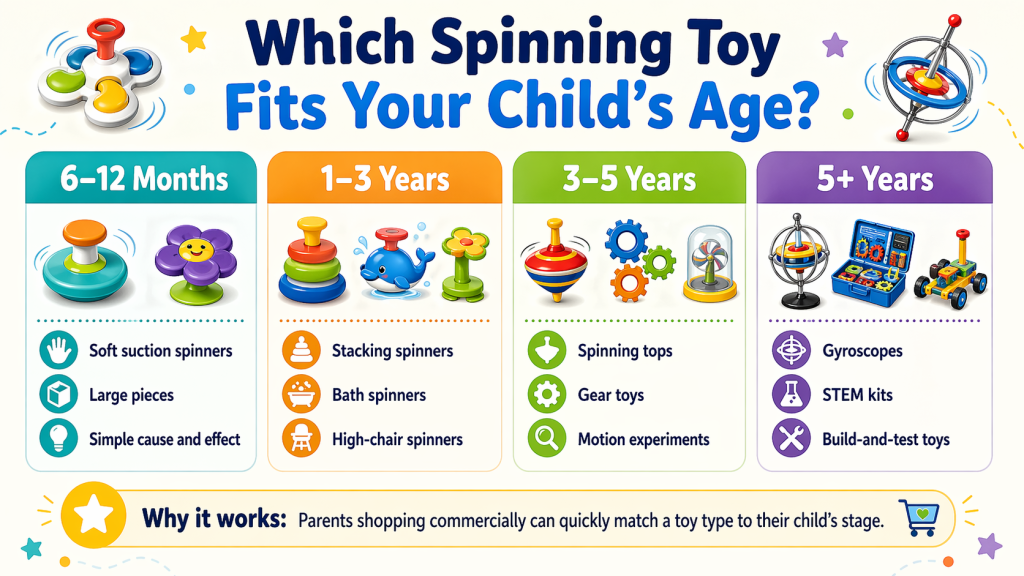
Not every spinning toy fits every child, so age matters.
For babies and younger toddlers, look for large pieces, soft edges, suction bases, and simple movement. For older toddlers and preschoolers, choose toys with stacking, sorting, gears, color matching, or build-and-test features.
For babies 6–12 months
Choose soft sensory spinners, suction cup toys, or simple cause-and-effect toys. Keep pieces large and avoid anything with small detachable parts.
For toddlers 1–3 years
This is the sweet spot for toddler spinning toys. Kids at this age love suction spinners, spinning stackers, ball poppers, and simple activity toys.
For preschoolers 3–5 years
Preschoolers can handle more challenge. Gear boards, spinning tops, ramps, and STEM activity kits can help them compare speed, direction, and balance.
For older kids
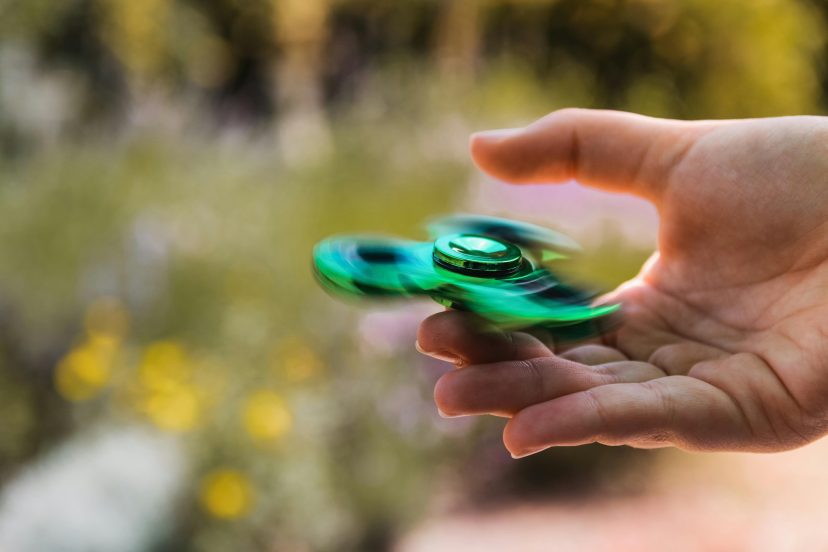
Older children may enjoy gyroscopes, fidget spinners used for physics lessons, spinning tops, and build-your-own motion kits.
How a Spinning Toy Teaches Science
A spinning toy can introduce basic physics without making your child feel like they are “doing school.”
When your child spins a toy, they see motion in action. They learn that force changes speed. They notice that some surfaces make spinning easier, while others slow things down.
That is friction. But you do not have to say “friction” like a textbook. You can simply ask, “Does it spin longer on the table or the rug?”
That one question turns play into investigation.
STEM Skills Kids Build Through Spinning Play
Spinning toys support several early learning skills at once.
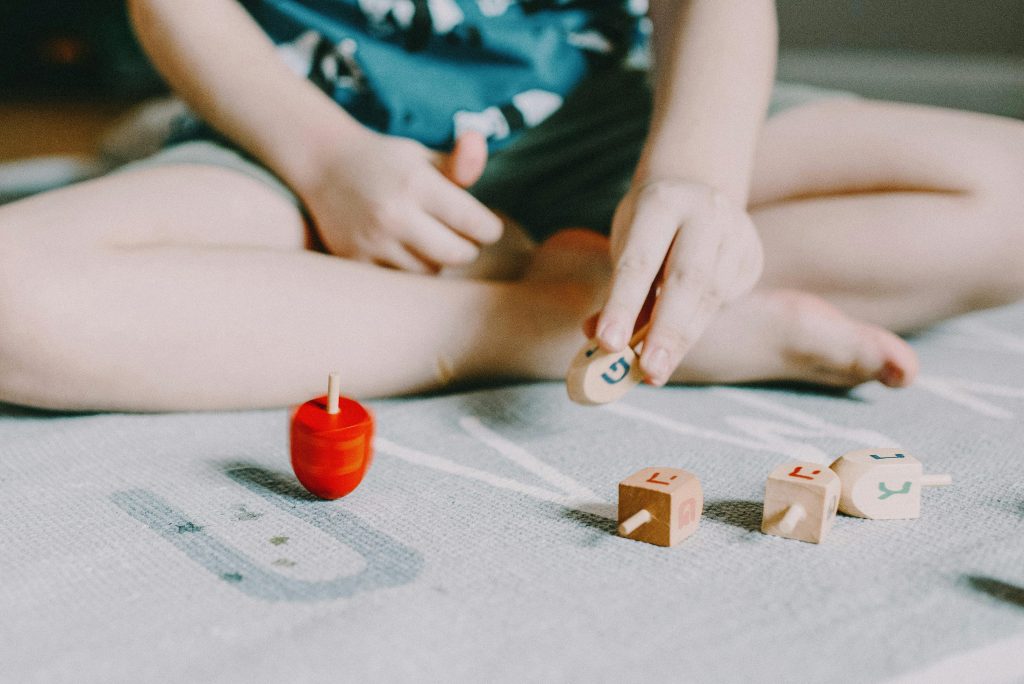
They help children practice observation because they watch what changes. They build fine motor skills because little hands twist, press, stack, pull, and push. They support spatial awareness because children notice shapes, direction, balance, and placement.
The American Academy of Pediatrics explains that play supports executive function skills such as flexible thinking, working memory, self-regulation, problem-solving, and attention.
That means a spinning toy is not just “keeping them busy.” It can help build the kind of thinking skills children use later for reading, math, planning, and everyday problem-solving.
Types of Spinning Toys to Consider
There are several types of spinning toys, and each one supports a slightly different kind of learning.
Suction cup spinning toys
These stick to high chairs, tables, bathtubs, windows, or trays. They are great for babies and toddlers because they stay in place and encourage repeated reaching and spinning.
Spinning stacker toys
These combine sorting, stacking, gravity, and motion. Kids place pieces on a pole and watch them spiral down.
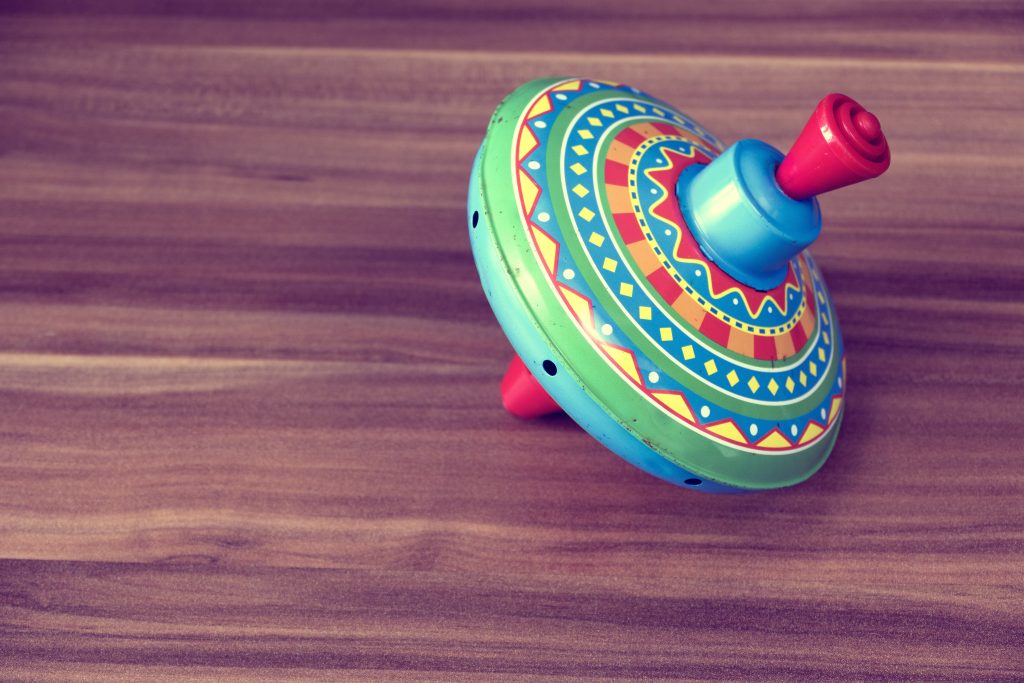
Spinning tops
Classic spinning tops are wonderful for older toddlers and preschoolers. They teach balance, force, speed, and patience.
Gear toys
Gear-based toys are excellent for STEM education because children can see how one moving part affects another.
Sit-and-spin toys
These support gross motor play, balance, coordination, and body awareness.
What to Look for Before Buying a Spinning Toy
A good spinning toy should match your child’s age, interests, and stage of development.
Look for toys that are:
- Age-appropriate
- Easy to clean
- Durable
- Smooth-edged
- Large enough to avoid choking risks
- Engaging without being overwhelming
- Open-ended enough for repeat play
Also think about where your child will use it. A suction spinner may be perfect for a high chair. A sit-and-spin toy needs floor space. A gear toy may work better at a play table.
Spinning Toy Safety Checklist
Safety comes first, especially with toys for babies and toddlers.
Before buying, check the age recommendation, piece size, material, and cleaning instructions. Avoid tiny detachable parts for children under 3. Also inspect suction toys regularly because curious toddlers can be surprisingly committed toy inspectors.
Look for sturdy construction and supervise active play. A spinning seat, for example, can be fun, but kids need space around them so they do not bump into furniture.
Best Spinning Toy Picks on Amazon
Here are five Amazon options that fit different ages, play styles, and STEM learning goals.
1. Fat Brain Toys SpinAgain
The Fat Brain Toys SpinAgain is a stacking and spinning toy for toddlers. It includes colorful discs that spin down a corkscrew pole and stack in different orders. Amazon’s product listing describes it as a toddler spinning stacker with six colorful discs that spiral down the pole.
Features:
- Stacking and spinning design
- Colorful discs
- Large toddler-friendly pieces
- Encourages sorting and hand-eye coordination
Best for: Toddlers who enjoy repetition, sorting, and “do it again” play.
Use case: Great for quiet floor play, early STEM learning, and practicing fine motor control.
2. ALASOU 3PCS Suction Cup Spinner Toys
The ALASOU 3PCS Suction Cup Spinner Toys are simple, colorful spinners that stick to smooth surfaces. Amazon’s listing describes them as multifunctional bath toys that can attach to bathtubs, dining tables, and windows.
Features:
- Three-piece spinner set
- Suction cup base
- Works on smooth surfaces
- Can be used during bath time or high-chair play
Best for: Babies and toddlers who like sensory spinning and cause-and-effect play.
Use case: Handy for bath time, restaurant waiting time, or high-chair entertainment.
3. VTech Spin and Learn Color Flashlight
The VTech Spin and Learn Color Flashlight adds lights, sounds, and a spinning ring to the play experience. Amazon’s listing notes that it teaches animals, colors, numbers, and includes more than 70 songs, sounds, melodies, and phrases.
Features:
- Spinning ring
- Light-up flashlight
- Songs and phrases
- Teaches colors, animals, and numbers
Best for: Toddlers who enjoy interactive learning toys with sound.
Use case: Good for early color recognition, pretend play, and travel-friendly entertainment.
4. Battat Toy Bus with Moving Parts
The Battat Toy Bus adds a fun twist to spinning play. The listing describes it as a spinning toy bus where kids pull the handle and watch nine passengers spin around. It also includes a color matching game and removable ramp.
Features:
- Pull-handle spinning action
- Color matching passengers
- Removable ramp
- Cause-and-effect play
Best for: Toddlers who love vehicles, matching games, and moving parts.
Use case: Great for combining pretend play with sorting, matching, and motor skills.
5. Mushie Sunshine Suction Spinner Toy
The mushie Sunshine Suction Spinner Toy is a softer, calmer option. Amazon’s listing describes it as a toddler sensory toy made with food-grade silicone, with clouds that spin around the sun.
Features:
- Food-grade silicone
- Suction base
- Gentle spinning motion
- Easy-care design
Best for: Younger toddlers, sensory play, and parents who prefer a softer, minimalist toy style.
Use case: Lovely for high-chair play, quiet play, or soothing visual engagement.
How to Use a Spinning Toy for STEM Learning at Home
You do not need a lesson plan. You just need a few curious questions.
Try asking:
- “What happens if you spin it gently?”
- “What happens if you push harder?”
- “Which one spins the longest?”
- “Does it spin better on the table or the floor?”
- “Can you make it stop without grabbing it?”
These questions help your child observe, compare, predict, and test. That is the heart of STEM.
Easy Spinning Toy Activities for Kids
Here are a few simple ways to turn spinning play into hands-on learning.
Spin race
Choose two spinning toys. Spin them at the same time and see which one lasts longer. Older kids can use a timer.
Surface test
Try spinning the toy on a table, tile floor, rug, tray, or cardboard. Ask which surface slows it down fastest.
Gentle vs strong push
Have your child spin the toy softly, then with more force. Talk about how the speed changes.
Color blur experiment
Use a colorful spinner and ask what colors your child sees when it moves fast. Some colors may blur together.
Pair Spinning Toys With Other STEM Projects
A spinning toy is a great starting point, but you can extend the learning with ramps, tracks, marble runs, and building projects.
For example, if your child enjoys watching objects move, roll, drop, and change speed, they may also love building a hands-on marble roller coaster STEM project. It builds on the same curiosity: motion, gravity, speed, and cause and effect.
Think of the spinning toy as the appetizer. The marble roller coaster is the full STEM snack plate.
What Research Says About Play and STEM Learning
Play is not just a break from learning. It is one of the ways children learn best.
A 2018 clinical report from the American Academy of Pediatrics, titled The Power of Play, explains that play supports healthy brain development, creativity, emotional regulation, problem-solving, and stronger caregiver-child bonds. That matters because a simple spinning toy can invite children to test ideas naturally. They push, watch, adjust, and try again.
The National Association for the Education of Young Children also notes that STEM starts with play. Through hands-on activities, children explore balance, motion, materials, structure, and cause and effect. So when your child stacks a spinner, compares speeds, or notices which surface slows the toy down, they are not “just playing.” They are practicing early science and engineering thinking in a way that feels natural and fun.
Common Mistakes to Avoid When Buying Spinning Toys
The biggest mistake is buying a toy that is too advanced or too babyish for your child.
A toddler may get frustrated with a delicate spinning top that requires careful wrist control. Meanwhile, a preschooler may lose interest in a very basic suction spinner after a few minutes.
Also avoid toys that are too loud, too cluttered, or too single-purpose. A good STEM toy should invite repeat play, not just one button press and done.
FAQs About Spinning Toys
What is the best spinning toy for toddlers?
The best spinning toy for toddlers is one with large pieces, smooth edges, simple movement, and repeat-play value. Suction cup spinners and stacking spinners are often great choices because toddlers can easily push, pull, stack, and watch the result.
Are spinning toys good for STEM learning?
Yes. Spinning toys can teach early STEM concepts like force, motion, balance, gravity, friction, speed, and cause and effect. They work especially well when adults ask simple questions that encourage children to observe and compare.
What age is best for a spinning toy?
Many spinning toys are designed for children ages 1 and up, but always check the product’s age label. Babies need soft, simple, large-piece toys, while preschoolers can enjoy more complex tops, gears, and motion-based STEM toys.
Can spinning toys help with fine motor skills?
Yes. Spinning toys often require children to twist, push, press, stack, pull, and grasp. These actions strengthen hand muscles and support hand-eye coordination, which can help with later skills like drawing, writing, and using tools.
Are suction cup spinning toys safe?
Suction cup spinning toys can be safe when they are age-appropriate, made with sturdy materials, and used under supervision. Check for loose parts, clean them often, and attach them only to smooth, safe surfaces.