Best Science Kit for Kids: How to Choose the Right One
We may earn a commission for purchases made using our links. Please see our disclosure to learn more.
A good science kit for kids should do more than create one impressive reaction and then disappear into a closet. The right kit helps a child ask questions, test ideas, and return for another experiment later. Kits vary widely in age level, mess, reusable parts, and how much adult help they require.
This guide compares useful kit types, six options for different ages and interests, safety considerations, and research on hands-on inquiry. It also shows how to turn a packaged activity into stronger STEM learning.
How to Choose a Science Kit for Kids Without Overbuying
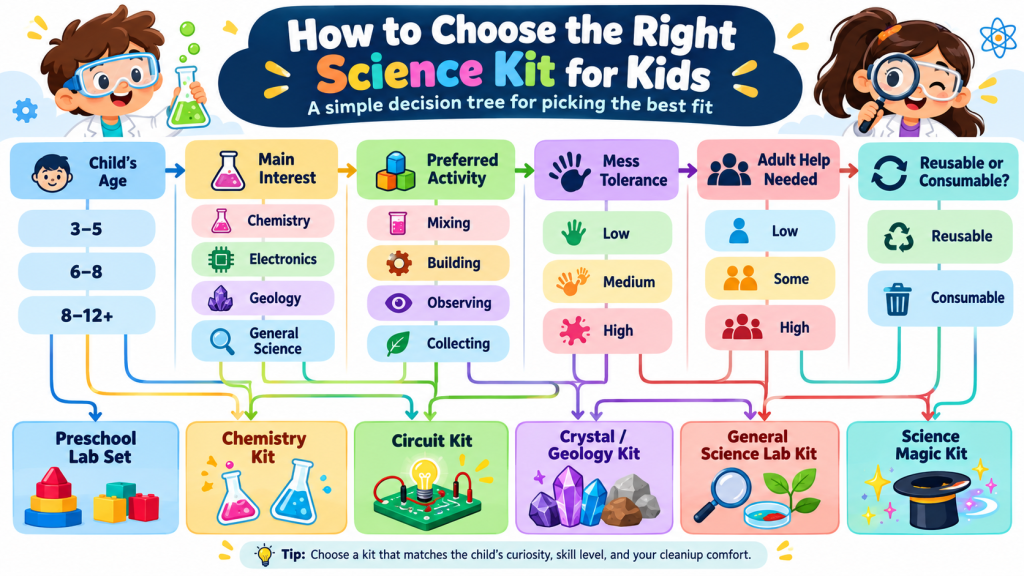
Start with the child, not the box. A kit with 100 activities is poor value if it is too advanced or simply uninteresting.
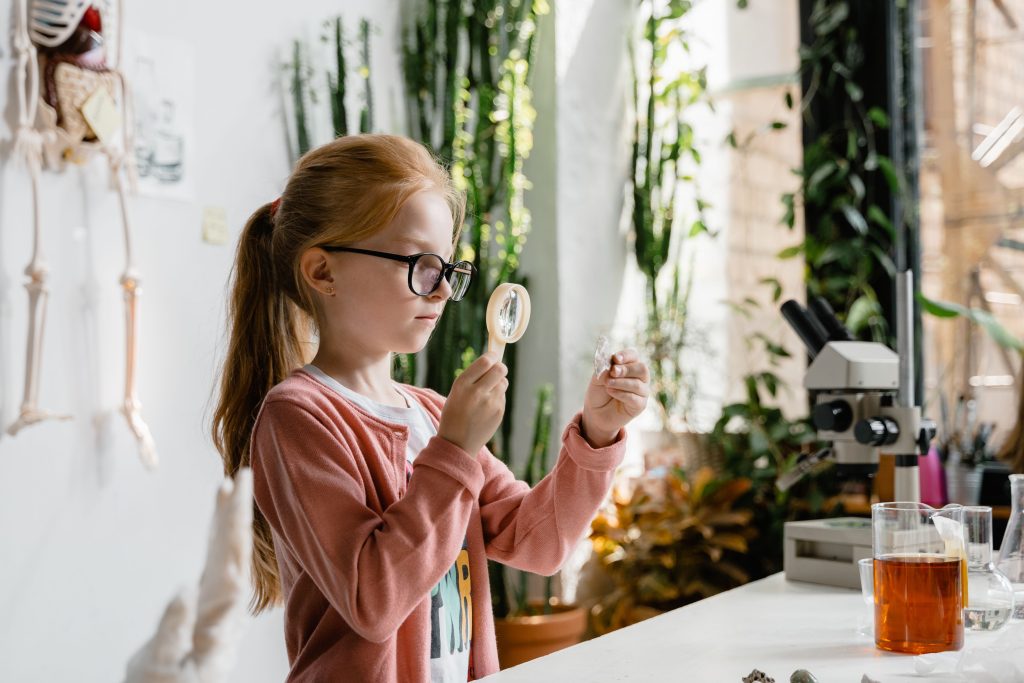
Ask what the child likes, how independently they follow directions, and how much setup you can manage. A science kit for kids who love building should feel different from one for a child fascinated by rocks. For beginners, early success often matters more than a huge activity count.
Start With Age, Reading Level, and Attention Span
Age labels are useful, but children of the same age can have different reading skills, patience, and fine-motor control.
For younger kids, look for large tools, visual directions, and short cause-and-effect activities. Older learners can handle measuring, circuits, and longer experiments. Tweens often enjoy troubleshooting.
Aim for slightly challenging, not discouraging. Check whether the child can read the guide alone or needs help.
Match the Science Theme to the Child’s Curiosity
A “STEM” label tells you little. Ask whether the child would rather mix, build, observe, collect, or troubleshoot.
Chemistry kits offer quick visual changes. Electronics kits reward patient builders. Crystal and geology sets suit kids who enjoy collecting and slow changes. General lab-tool sets are flexible because the equipment can be reused.
A science kit for kids tied to an existing curiosity is much more likely to be opened again.
What Makes a Kit Worth the Money
Value is not the same as the lowest price or the biggest activity number. Ask how many useful sessions the kit can create.
Reusable circuit parts and lab tools usually offer better long-term value, while crystal powders and chemistry materials eventually run out. Check whether the guide explains why an experiment works and whether replacement supplies are easy to find.
A science kit for kids is easier to reuse when common materials can replace spent supplies.
Recommended Science Kit for Kids: 6 Strong Options
These picks cover different ages, interests, experience levels, and household needs.
| Product | Best for | Standout feature | Main consideration |
| National Geographic Mega Science Lab | Variety seekers | 75 experiments | More parts to organize |
| SNAP CIRCUITS Jr. SC-100 | Electronics beginners | 100+ circuit projects | Requires batteries |
| Learning Resources Primary Science Lab Set | Preschoolers | 22 reusable pieces | Needs household items |
| Thames & Kosmos Kids First: Science Laboratory | Guided early science | Large tools and cards | Best with adult help |
| National Geographic Mega Crystal Growing Kit | Crystal fans | Six crystal projects | Consumable materials |
| National Geographic Science Magic Kit | Reluctant learners | Magic-style activities | Mostly guided |
National Geographic Mega Science Lab
Best for: Kids ages 8–12 who want variety
This set combines earth science, chemistry, and science-magic activities, with 75 experiments listed for the current kit. It suits children who bounce between interests and families who prefer one varied box instead of several narrow kits. The main consideration is organization because a larger activity library means more materials to track.
SNAP CIRCUITS Jr. SC-100 STEM Electronics Kit
Best for: Kids ages 8+ who like building
The SC-100 uses snap-together electronic parts and a project manual for more than 100 circuit builds. Reusable components give it strong repeat value without chemical cleanup, making it a good fit for tinkerers. It requires batteries, and the pieces need consistent storage so missing components do not derail projects.
Learning Resources Primary Science Lab Set
Best for: Preschool and early elementary beginners
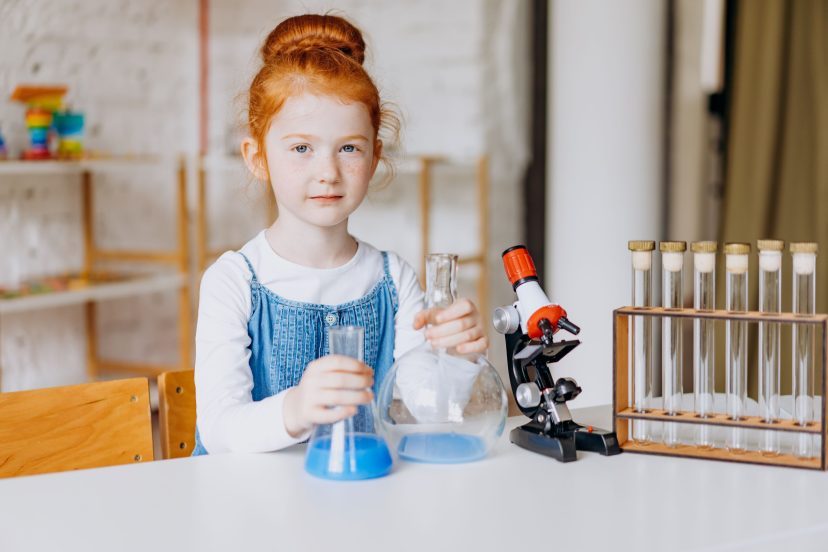
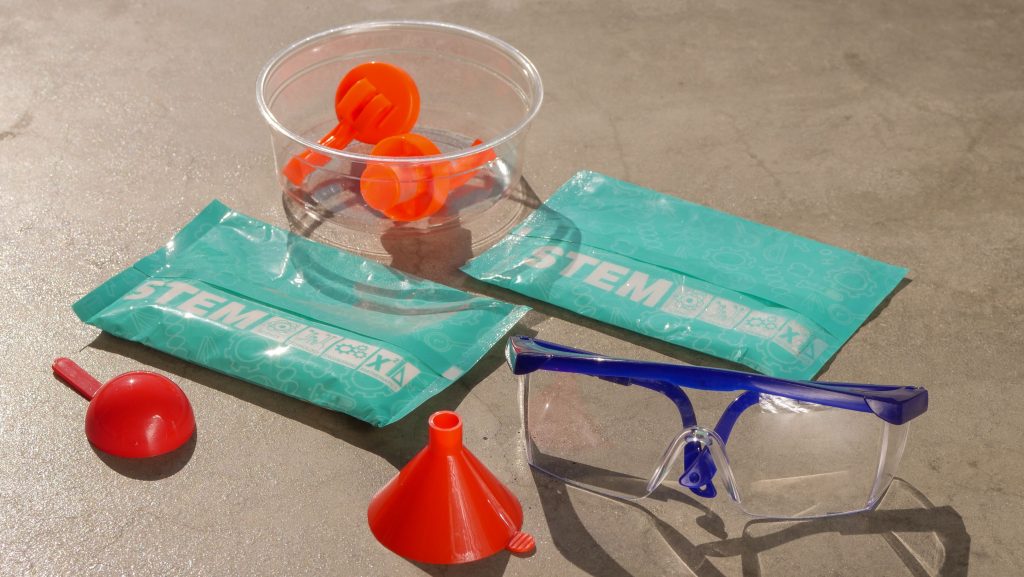
This 22-piece set includes child-sized lab tools such as a flask, beaker, test tubes, dropper, magnifier, goggles, and activity cards. It is designed for ages three and up and supports simple hands-on exploration. Many activities use common household ingredients, so adults should expect to supply a few basic materials.
Thames & Kosmos Kids First: Science Laboratory
Best for: Families wanting guided preschool science
Kids First: Science Laboratory includes 24 large reusable tools, a 16-page manual, 10 illustrated experiment cards, and a storage case. The visual cards suit children who cannot yet read lengthy instructions. It is a useful bridge from pretend lab play to structured observation, although younger children benefit from active adult guidance.
National Geographic Mega Crystal Growing Kit
Best for: Kids ages 8–12 who enjoy geology
This kit focuses on growing six crystals and includes seed rocks, growing chambers, real crystal specimens, a learning guide, and a light-up display. The slower pace suits children who enjoy checking progress over several days. Because the materials are consumable, it offers less repeat use than a circuit set or reusable lab collection.
National Geographic Science Magic Kit
Best for: Kids who respond to spectacle
This kit frames chemistry and physics activities as magic-style demonstrations, using materials such as pH paper, powders, cups, a pipette, gloves, and a wand. That framing can appeal to children who are unsure about science but enjoy performing for others. Its main limitation is that the activities are more guided than open-ended.
Check Setup, Refills, and Reusability
A practical science kit for kids should fit your household too. Before buying, check the supply list for items not included. “Just add household materials” can mean water, or it can mean batteries, food coloring, balloons, and measuring tools.
Reusable equipment can last for years; powders, crystals, and slime ingredients do not. If the original box is awkward, a labeled bin can prevent missing parts.
Safety and Supervision Matter More Than the “Wow” Factor
Science activities may involve small parts, powders, batteries, liquids, or tools, so age guidance matters. The U.S. Consumer Product Safety Commission advises families to follow age recommendations and keep toys with small parts away from children under three.
Read instructions before starting, especially for chemistry, crystals, heat, or electricity. Keep food away, wash hands afterward, follow supervision guidance, and never add stronger chemicals or outside power sources.
Research-Backed: What Helps Kids Learn From Science Kits
Hands-on activity alone does not guarantee deep learning. The strongest experiences give children something to predict, test, observe, explain, and revise.
A 2024 meta-analysis of inquiry-based science learning synthesized 20 studies involving 1,349 students and reported a large positive effect on higher-order thinking skills. The result does not prove that any commercial kit automatically improves learning, but it supports choosing activities that make the learner think rather than simply follow steps.
The Next Generation Science Standards emphasize what students do to make sense of phenomena, including carrying out investigations and reasoning from evidence.
For younger children, NAEYC recommends experiences that let them manipulate materials, solve problems, and talk about what they notice.
Turn Step-by-Step Activities Into Real Scientific Thinking
Ask the child to predict before starting. “What do you think will happen?” turns following directions into testing an idea.
Afterward, discuss what changed and what remained the same. Then repeat the activity with one safe variable adjusted, such as water amount, ramp angle, magnet distance, or circuit layout.
Once a child is comfortable with guided steps, these scientific method experiments for kids can help them practice hypotheses, one-variable changes, and evidence-based discussion.
Best Choices for Small Spaces and Low-Mess Homes
If you share a table or dislike sticky cleanup, prioritize compact tools and dry activities. Electronics kits are convenient because they avoid liquids and pack away quickly.
Crystal projects need little daily work but require a protected spot to sit undisturbed. Chemistry kits can work too, especially with a tray and nearby sink.
The best science kit for kids in a small space is the one that fits your table and storage without turning every experiment into a major cleanup project.
Choosing for Siblings, Homeschooling, and Group Use
For siblings, choose kits with roles that can be divided: one child measures, another records, and another assembles. Reusable components usually scale better because activities can be repeated.
Homeschool families should favor clear manuals and projects that connect naturally to notebooks, measurement, or follow-up research. For clubs and classrooms, setup speed and replacement parts matter more than fancy packaging.
A science kit for kids is easier to share when components are simple to count and store.
When a Science Kit Beats a DIY Experiment
DIY science is inexpensive and flexible. Paper, cups, vinegar, balloons, magnets, and recycled materials can support plenty of useful exploration.
A commercial kit earns its place when it saves planning time or provides specialized parts such as circuit modules, crystal materials, prepared specimens, or child-sized tools.
Many families get the best value by using a science kit for kids as a launch point, then extending the same concept with household materials or a related DIY challenge.
Common Buying Mistakes to Avoid
Do not buy only for the age printed on the box. Interest and independence matter just as much as birthdays.
Do not count activities without checking whether many are minor variations. Reusable equipment, good explanations, and chances to change variables often matter more than a headline number.
Also check storage, refill needs, and adult workload. A science kit for kids that feels inconvenient to set up may never get a second chance after the first experiment.
FAQs About Choosing a Science Kit for Kids
What age is best for a first science kit for kids?
Preschoolers can start with simple science tools when the kit is designed for young learners and an adult supervises. Look for large pieces, visual directions, and short activities. Older children can move toward measuring, troubleshooting, circuits, and multi-step experiments as their reading skills, patience, and independence develop.
Are chemistry kits better than electronics kits?
Neither is universally better. Chemistry suits kids who enjoy mixing substances and watching visible reactions, while electronics appeals to builders who like assembling and troubleshooting. The best science kit for kids usually connects to something the child already enjoys doing, because interest gives them a reason to keep experimenting after the novelty wears off.
How much adult help should a science kit require?
Younger children often need an adult to read instructions, measure materials, and manage safety. Older kids may work more independently, but an adult should still review warnings and setup requirements. A good kit keeps the child actively involved rather than turning the activity into a demonstration where the adult completes every important step.
Are reusable science kits better value?
Often, but not always. Reusable circuit parts, lab tools, and measuring equipment can support many sessions. Consumable kits can still be worthwhile when they teach a specific process, such as crystal growth. Compare likely sessions, refill requirements, the quality of the learning guide, and whether the child is likely to revisit the theme.
What should I look for in a science kit for kids as a gift?
Match the theme to the child’s interests, then check age guidance, setup time, mess, extra supplies, and how much help an adult will need to provide. A gift works better when the first session feels manageable and rewarding. If their interests are unknown, a broad multi-theme kit is usually a safer choice than a highly specialized set.
Final Recommendation: Pick the Science Kit for Kids That Will Actually Get Used
The best science kit for kids matches the child’s curiosity, ability, and available space while keeping setup and supervision realistic for adults. For broad variety, the National Geographic Mega Science Lab covers several themes in one box. For reusable, low-mess building, SNAP CIRCUITS Jr. SC-100 is a stronger fit. Younger beginners may get more value from the Learning Resources Primary Science Lab Set or Thames & Kosmos Kids First: Science Laboratory.
Do not choose by activity count alone. Favor clear instructions, age-appropriate challenge, sensible safety guidance, and room for “what if?” questions. If you can picture the kit coming back out next weekend, you are probably choosing well.