Best STEM Kits for Kids: How to Choose and 5 Top Picks
We may earn a commission for purchases made using our links. Please see our disclosure to learn more.
An impressive-looking science kit can disappoint after one afternoon. Some promise dozens of experiments but need extra supplies. Others include exciting gadgets that are too difficult for the child receiving them. Choosing stem kits gets easier when you look past the biggest numbers on the packaging and focus on what the learner will actually do.
A good kit fits the child, offers an achievable challenge, and invites further investigation. That might mean mixing colors, assembling a circuit, directing a robot, or solving a marble maze. This guide compares kit types, buying considerations, and five options for different learning goals.
What Should You Look for When Choosing a STEM Kit?
A useful kit encourages children to ask questions, test ideas, notice results, and make adjustments. STEM means science, technology, engineering, and mathematics; one kit need not cover everything.
A circuit set might explain switches and electricity, while a marble puzzle develops planning and spatial reasoning. Favor activities where children make decisions instead of watching a demonstration.
Finishing a model is not the same as understanding it. The experience becomes more educational when the learner can explain why something worked, spot a mistake, or try another design.
Types of STEM Kits and What They Teach
Science experiment kits explore observable changes, including crystals, mixtures, and reactions. Some projects require materials that cannot be reused.
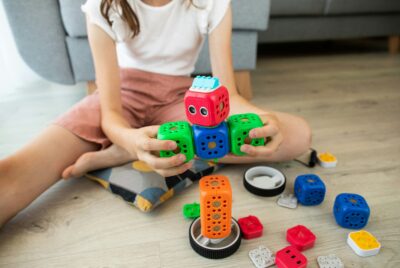
Construction kits focus on stability, motion, and redesign. Electronics kits add batteries, switches, lights, or motors to demonstrate working systems. Coding and robotics kits introduce sequences, commands, and debugging; some use physical controls, while others need apps.
Logic and marble-run sets develop planning through puzzles without electronic equipment. Choose the category that fits the child’s interests first. Variety offers more than repetitive activities.
Match the Kit to the Child’s Age and Skills
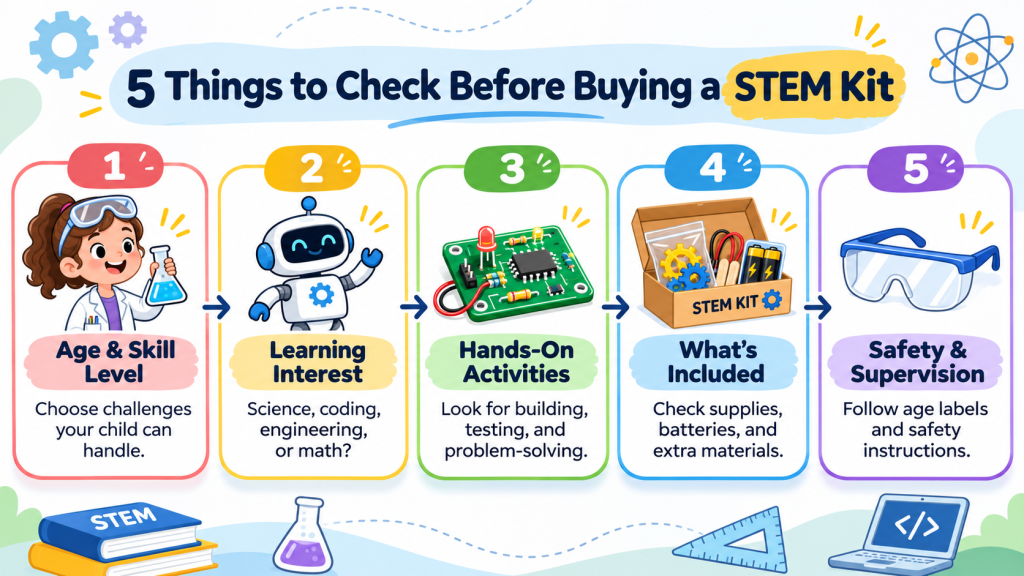
Age labels cannot guarantee independent play. Check reading demands, fine-motor skills, attention span, and required adult help.
For preschoolers, favor sturdy tools, short steps, and visible results with supervision. Early elementary learners may enjoy basic builds or robots with physical controls. Older children can tackle complex circuits and challenges requiring troubleshooting.
A puzzle-loving child might manage difficult logic tasks but dislike detailed written directions. Start with a manageable project and leave room to progress.
Choose a Subject the Child Already Enjoys
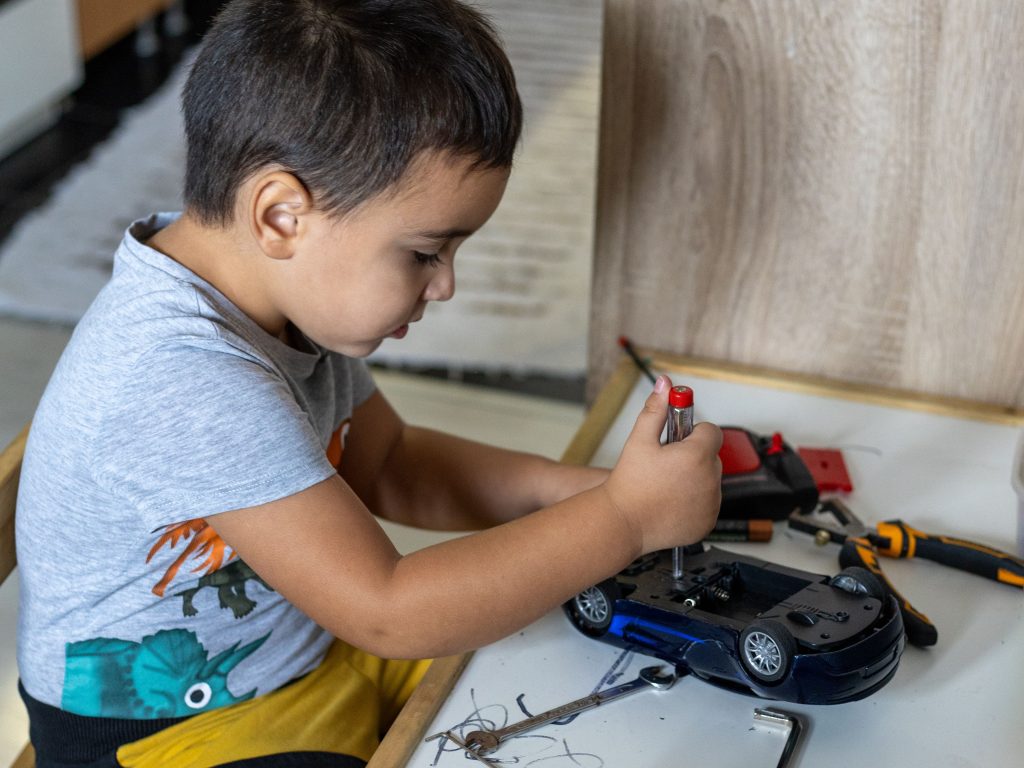
Interest helps keep a kit in use. A child fascinated by vehicles might prefer gears; another who collects rocks may enjoy geology or crystals.
Ask what the learner wants to make or discover. Building a moving object differs from solving puzzles, although both involve engineering thinking.
When buying gifts, check existing equipment. Another beginner electronics set may add less than a chemistry project. Avoid choosing solely by colorful packaging or vague promises about intelligence.
Check What Is Actually Included
Read the contents list and preview instructions when available. Some kits supply materials for few experiments while the rest need household ingredients.
Check for measuring tools, batteries, protective equipment, replacements, and enough materials to repeat activities. For connected kits, confirm device compatibility and any account or internet requirement.
Separate reusable equipment from consumables. Plastic beakers and circuit modules support later projects; chemical packets eventually run out. A large box may still be incomplete.
Look for Instructions That Encourage Problem-Solving
Clear instructions should go beyond copying pictures. Useful guides encourage predictions, testing, and explanations.
Look for gradual progression. Moving from a simple light circuit to one controlled by a switch gives children a reason to understand each component. Puzzles with increasing difficulty work similarly.
Adults can help without taking over. Before fixing mistakes, ask, “What could you change?” Allow time when activities require continuous adult assistance.
Screen-Free Versus App-Based STEM Kits
Screen-free sets provide self-contained activities. Cards, buttons, and snap-together parts avoid software setup and device-sharing problems.
App-connected kits may offer visual programming, sensor feedback, and advanced projects. Their usefulness, however, depends on compatible devices, updates, charging, and sometimes online accounts.
Neither format automatically teaches more. Physical commands can make initial coding concepts easier to follow; children already comfortable programming may want more flexible app controls. Confirm ongoing software support before buying a connected kit.
Recommended STEM Kits for Different Learners
These five options cover early science tools, chemistry, electronics, coding, and logic puzzles. Choose according to learning goals, not a single overall winner.
Learning Resources Primary Science Lab Set (LER2784)
Best for: Preschoolers exploring observation and simple experiments.
Designed for ages three and up, this 22-piece set includes plastic science tools such as a beaker, flask, magnifier, eyedropper, goggles, and activity cards. Reusable equipment gives young children practice measuring and observing. Household ingredients are needed for many activities, and adults should guide experiments; the tools do not make chemical mixtures automatically safe.
National Geographic Amazing Chemistry Set (NGMEGACHEMAR)
Best for: Children who enjoy visible reactions and guided projects.
This chemistry set supplies materials for 15 featured experiments, with a separate guide suggesting 85 more activities using household items. Color-changing reactions and crystal projects provide different things to observe. It offers variety for family science sessions, but the large advertised total does not mean every experiment is ready to perform straight from the box.
Elenco Snap Circuits Jr. SC-100 Electronics Exploration Kit
Best for: Ages eight and up who want to understand basic electronics.
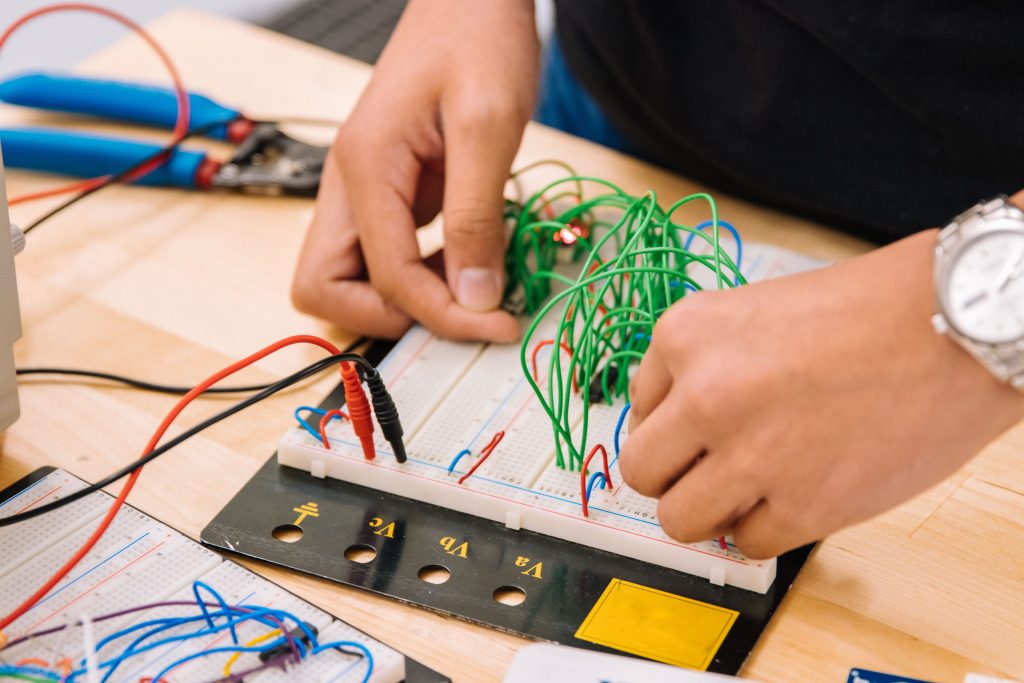
Snap-together modules let children assemble working circuits without soldering. The illustrated manual covers more than 100 projects, including sound and motor activities, making it possible to reuse the same components in new combinations. Batteries are required, and children still need to follow the layout diagrams carefully; it is not a free-form robotics kit.
Learning Resources Botley 2.0 the Coding Robot Activity Set
Best for: Young beginners learning coding without a tablet.
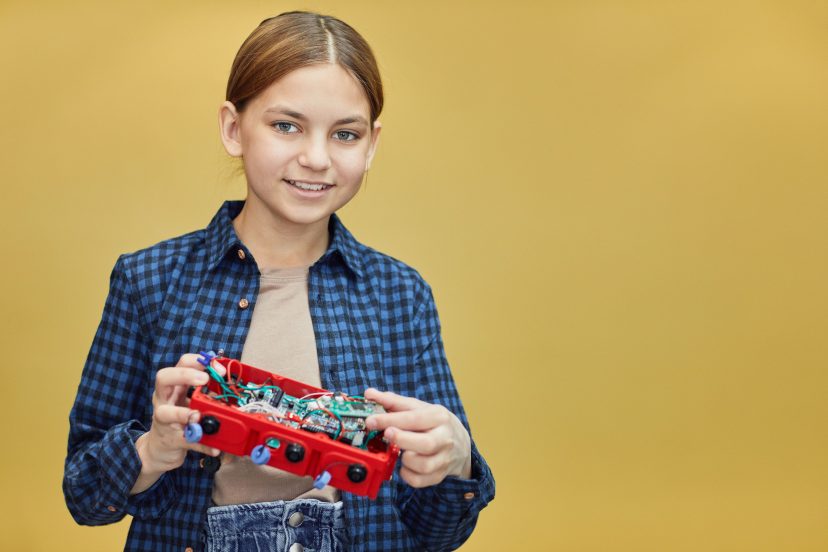
Botley 2.0 uses a handheld programmer to follow movement sequences, and its 78-piece activity set provides obstacles and coding challenges. Children can test routes, identify errors, and change commands without opening an app. It requires batteries and a suitable play area, and learners looking to write computer code will need a different product later.
ThinkFun Gravity Maze Marble Run Logic Game
Best for: Independent puzzle-solvers who enjoy spatial challenges.
Gravity Maze combines movable towers, marbles, and 60 challenges that progress in difficulty. Players arrange pieces to send a marble toward a target, then revise unsuccessful paths. It works well for short, repeatable problem-solving sessions without electronic setup. The focus is logic and spatial planning rather than broad science experiments, and small marbles require careful storage.
Budget for the Cost Beyond the Kit
Initial cost is only one consideration. Refills, batteries, storage, and expansion sets affect how frequently a kit gets used.
Limited chemistry reagents may give fewer sessions than reusable circuits or puzzles. Store pieces carefully.
Compare the cost per meaningful activity rather than the number printed on the box. A basic kit rebuilt weekly may be a better purchase than a large assortment used once.
Turn Each Activity Into a Learning Experience
Ask for a prediction, complete an activity, and discuss results. Then test a change.
For a marble maze, test a new path. For a circuit, compare an open and closed switch. With chemistry, change one measured ingredient at a time only when instructions permit.
Record observations in drawings or a notebook. For more ideas using familiar materials, explore these simple chemistry STEM activities that extend supervised learning beyond boxed projects.
Safety and Supervision Come Before Excitement
Follow age guidance and instructions for every activity. Small parts, marbles, batteries, hot surfaces, and chemicals present different hazards.
Keep experiments away from food, never taste mixtures, and do not replace kit chemicals with household cleaners. Use suitable protective equipment for splash-prone work and let adults handle risky steps.
Make sure battery compartments are firmly closed, and keep any loose batteries out of reach of young children. Never connect toy circuits to wall outlets. Match supervision to ability and task, not just age.
Buying Mistakes That Lead to Disappointment
Experiment counts can mislead. A few projects children can rebuild may teach more than numerous demonstrations.
Consider setup time, too. A robot can frustrate families with only twenty minutes available; a chemistry experiment might require a protected workspace and careful cleanup.
Children enjoy different challenges. Match the kit to a specific interest, begin at a manageable level, and make sure there is something to test or change after following the instructions.
What Research Says About Hands-On STEM Learning
The National Academies’ 2019 report, Science and Engineering for Grades 6–12: Investigation and Design at the Center, emphasizes meaningful questions, evidence, testing solutions, and redesign. Its guidance supports active investigations rather than activities completed without reflection.
The report focuses on middle and high school education, so it should not be treated as proof that any commercial kit improves outcomes for preschoolers. A branded box alone cannot guarantee stronger reasoning skills.
Safety also matters. The U.S. Consumer Product Safety Commission’s toy safety guidance explains age-related small-parts restrictions and labeling requirements. For families, that means checking the specific kit’s warning labels and supervising appropriately. Educational value and safe use depend on the activity, not the word “STEM” on the packaging.
Frequently Asked Questions About STEM Kits
What age should children start using STEM kits?
Some introductory sets are designed for children as young as three, but the appropriate starting point depends on the product and the child’s abilities. Preschool activities should use age-suitable components and close adult supervision. Check for choking warnings and choose short, concrete tasks before moving to complex instructions or electronic builds.
Are expensive STEM kits better than affordable ones?
Not necessarily. Higher-cost sets may offer motors, sensors, or more components, but those extras help only if the child can use them. A reusable puzzle or simple lab tool set can provide worthwhile practice with observation and reasoning. Compare the supplied activities, replacement costs, and likely repeat use before judging value.
Do STEM kits work for homeschooling?
Yes, they can support homeschool lessons when linked to a clear learning goal. Choose a project that illustrates a concept, then ask the child to make a prediction, record observations, and explain the result. A kit works best as part of discussion and further investigation rather than as a complete substitute for a curriculum.
Can children of different ages use the same STEM kit together?
Often, with different responsibilities and the right supervision. A younger child might observe, sort larger pieces, or describe results while an older sibling reads directions and records measurements. However, do not let younger children handle small parts or materials outside the manufacturer’s age recommendations. A shared kit is suitable only when activities can be adapted safely.
Do children need coding experience for robotics kits?
Many beginner robots require no previous coding knowledge. Screen-free models teach sequences by letting children enter movements and watch what happens. Older or more advanced kits may use programming apps or text-based code. Look at the first activity and interface requirements so the child can achieve an early success before tackling harder commands.
Conclusion: Choose STEM Kits for the Learner
The most useful stem kits match a child’s curiosity with a challenge they can understand, test, and revisit. Check age guidance, included supplies, software needs, and running costs before comparing experiment counts or features.
For preschool science, the Learning Resources Primary Science Lab Set provides reusable tools and simple guided activities. Snap Circuits Jr. is a stronger choice for an older child fascinated by electricity, while Botley 2.0 suits young learners who want to explore coding without a screen. Chemistry fans and puzzle-solvers have different needs again.
Start with one clear learning goal and a kit that makes the first activity accessible. Then encourage the child to change something, observe what happens, and explain why. That is where the kit becomes more than another toy.