5 Awesome STEM Activities With Popsicle Sticks Only
We may earn a commission for purchases made using our links. Please see our disclosure to learn more.
You know those days when you want to do something meaningful and hands-on with your kids or students… but your brain is fried and your prep energy is at 3%?
That’s exactly where STEM Activities With Popsicle Sticks shine. They’re cheap, easy to store, and surprisingly powerful for teaching real science, math, engineering, and early coding skills—without you needing a lab coat or fancy kit.
In this guide, you’ll get:
- 5 core popsicle-stick STEM projects (with step-by-step ideas)
- Quick bonus activities you can pull out in 5 minutes
- Tips for different ages and abilities
- A short, research-backed section so you know this play really matters
- A few carefully chosen STEM tools that pair beautifully with your stick projects
This post may contain affiliate links; I may earn from qualifying purchases at no extra cost to you.
Why STEM Activities With Popsicle Sticks Work So Well
Popsicle sticks are the veggie stock of the STEM world: simple, humble, but you can build almost anything off them.
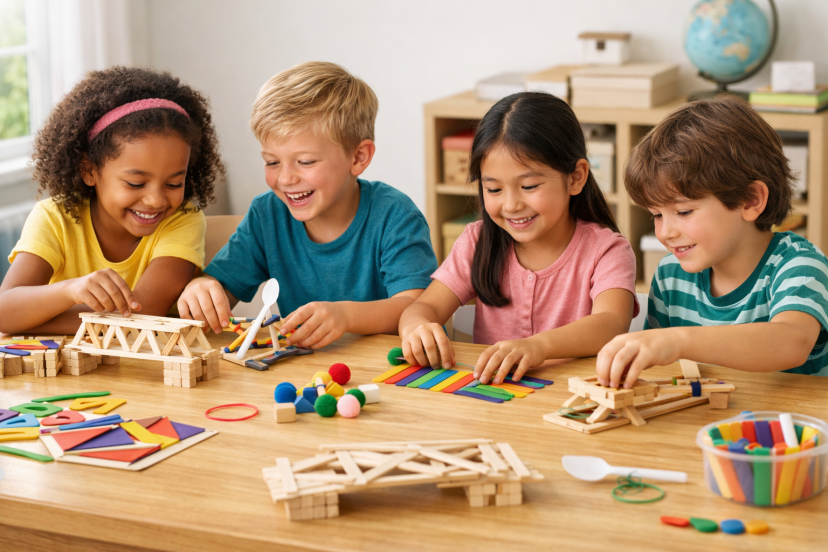
With just sticks (plus tape, rubber bands, or glue), kids can:
- Engineer structures (bridges, towers, rafts)
- Explore physics (force, motion, energy)
- Play with math concepts (patterns, symmetry, fractions, measurement)
- Practice early “coding” (sequences, symbols, decoding)
They’re also:
- Low-risk: If something breaks, you haven’t ruined an expensive kit.
- Low-prep: You can store them in a bin and be lesson-ready in 30 seconds.
- High-flexibility: Great for home, classrooms, after-school clubs, or therapy sessions.
That’s why popsicle sticks are perfect for hands-on STEM activities at home and in STEM centers, without overwhelming you.
What You Need to Get Started (It’s Probably Already at Home)
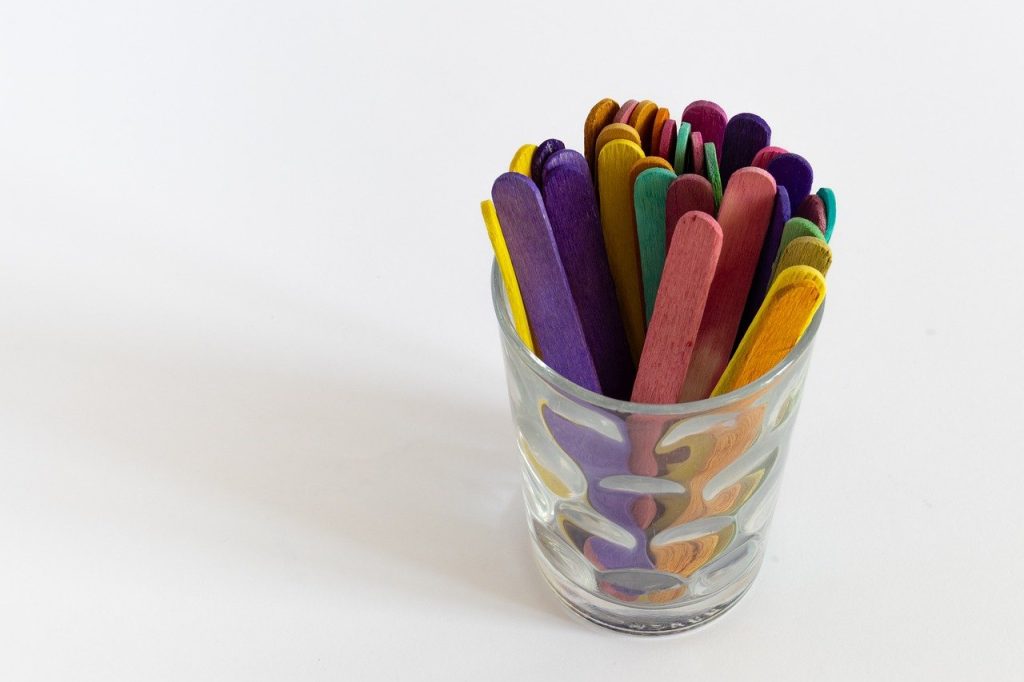
You don’t need a full makerspace. A basic STEM popsicle stick bin might include:
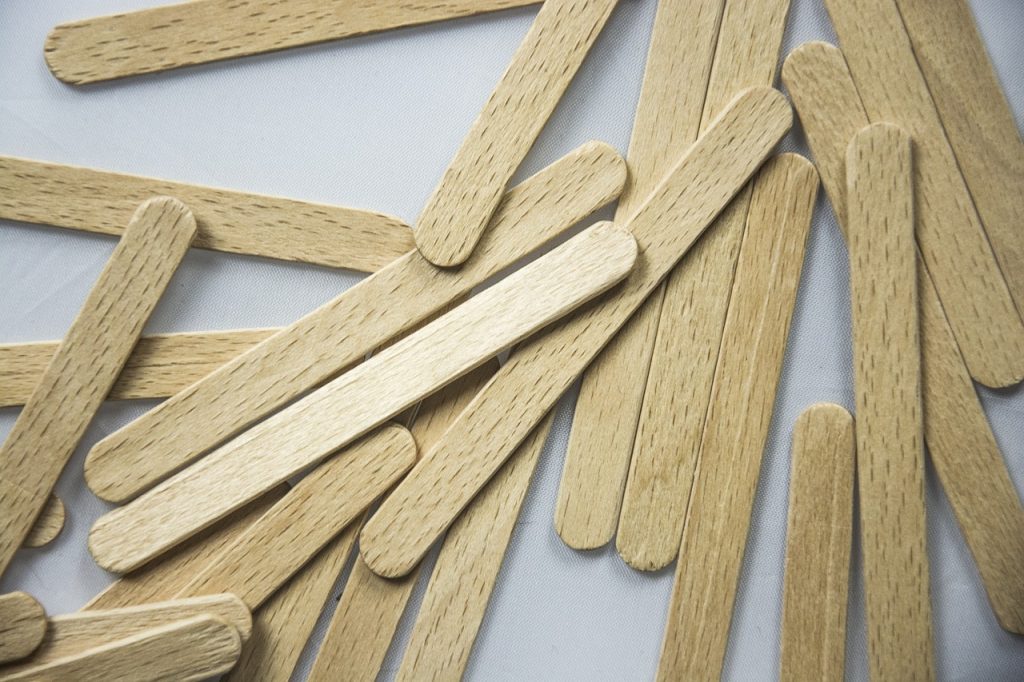
- Wooden craft sticks (regular and/or jumbo)
- Tape (masking or painter’s tape is forgiving)
- Glue or glue sticks
- Rubber bands
- Plastic spoons or bottle caps (for catapults/launchers)
- Markers or crayons
- Small “test” objects: coins, pom-poms, LEGO bricks, buttons
Optional but nice to have:
- Small cups or blocks (for bridge supports)
- A ruler or measuring tape
- Sticky notes for kids to label their designs (“Bridge A,” “Catapult 2,” etc.)
Once this lives in a labeled tub, you’ve basically created a ready-to-go STEM bin you can pull out anytime.
Ground Rules for Stress-Free STEM Time
Before you dive into specific STEM Activities With Popsicle Sticks, a few ground rules can save everyone’s sanity:
- Process over perfection.
Celebrate attempts, not just “pretty” results. “You tried three versions of that bridge—love that persistence.” - One safety rule everyone repeats.
For example: “Sticks stay below shoulders” or “We launch toward the wall, not people.” Simple, clear, repeated. - Ask, don’t tell.
When something breaks, ask: “What could we change next?” instead of jumping in to “fix” it. - Use a time box.
Let kids know: “We’ll build for 15 minutes, test for 10, then share for 5,” so transitions feel predictable.
STEM Activity #1: Build & Test Popsicle Stick Bridges
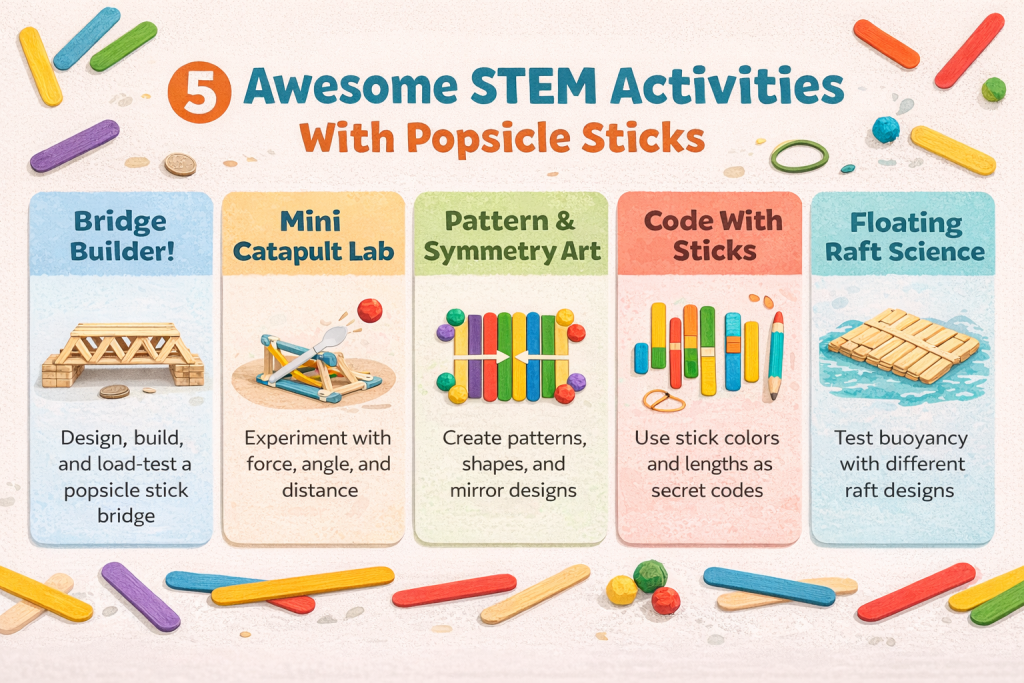
This one’s a classic engineering activity for kids and hits design, testing, and iteration in a really concrete way.
What you’ll need
- Popsicle sticks (lots!)
- Tape or glue
- Two supports (books, blocks, cups)
- Small weights: coins, mini-figures, washers, or similar
How to try it
- Set the challenge:
“Can you build a bridge that spans this gap and holds as many coins as possible?” - Let them explore designs:
- Simple flat bridge
- Triangle/truss bridge
- Layered or woven sticks
- Test and record:
- Add one coin at a time
- Count how many each design can hold
- Note which structure worked best and why
STEM ideas to highlight
- Engineering: Triangles and overlapping layers make structures stronger.
- Math: Counting coins, comparing which bridge held more, measuring bridge length.
- Scientific thinking: “What did we change this time? What stayed the same?”
STEM Activity #2: Popsicle Stick Catapults & Mini Launchers
Kids hear “catapult” and suddenly everyone is paying attention. This is perfect for talking about force, motion, and simple machines.
Basic catapult setup
You’ll need:
- Popsicle sticks
- Rubber bands
- Plastic spoon or bottle cap
- Light objects: pom-poms, paper balls, mini marshmallows
Simple build:
- Stack 6–8 sticks and rubber-band both ends (this is your base).
- Slide 1 stick underneath the stack, at a right angle.
- Attach the spoon or cap to one end of that single stick.
- Secure with a rubber band so it doesn’t wobble too much.
Press down, release, and watch things fly.
Ways to extend the learning
- Mark different launch lines and measure how far each object travels.
- Change one variable at a time: launch angle, number of sticks, or type of projectile.
- Ask: “What helps things go farther? What slows them down?”
This is a fantastic hands-on STEM learning moment because kids can see physics in action without a single formula.
STEM Activity #3: Pattern Puzzles, Symmetry Art, and Fractions
Popsicle sticks also make great math manipulatives. This project brings in patterns, symmetry, and early fractions.
Simple pattern & symmetry play
- Use colored sticks or let kids color the ends.
- Ask them to make repeating patterns:
- ABAB (red, blue, red, blue)
- AAB (red, red, blue)
- ABC (red, blue, green)
Then introduce symmetry:
- Build a line down the middle (the “mirror”).
- Challenge: “Can you make both sides match exactly?”
Fraction & shape challenges
- Use 4 sticks to make a square, then add more to split it into halves or quarters.
- Ask: “If we divide this shape into 4 equal parts, what fraction is each part?”
These simple STEM activities at home help kids see math as something they can touch and rearrange, not just numbers on a worksheet.
STEM Activity #4: Secret Codes and Name Coding With Sticks
This one sneaks in early coding concepts—patterns, symbols, and decoding—using only popsicle sticks and imagination.
Set up a simple code
Make a key together:
- 1 short stick = vowel
- 1 long stick = consonant
- Or: one color for each letter in their name
Kids then write their name or a short word using just sticks. A sibling or friend gets the “code key” and has to decode the message.
STEM ideas to highlight
- Sequencing: The order of sticks matters, just like the order of code or letters.
- Abstraction: We’re using symbols (stick patterns) to stand for real letters.
- Problem-solving: Kids debug when their secret message doesn’t make sense.
Ask fun questions like, “How would you code your pet’s name?” or “Can you make a code for the word ‘bridge’?”
STEM Activity #5: Simple Science Experiments With Popsicle Sticks
You can also use sticks as tools to explore basic science experiments. A few ideas:
Floating rafts (buoyancy)
- Kids build tiny rafts out of sticks (taped or glued).
- Test which designs float best with small “passengers.”
- Talk about why wide, flat designs often stay more stable.
Temperature & materials
- Place sticks in warm water, cold water, and room-temperature water.
- Check what changes: color, flexibility, or nothing at all.
- Ask: “What do you predict will happen before we test it?”
These science experiments with popsicle sticks don’t have to be fancy—just curious, observable, and repeatable.
Quick Bonus Ideas for 5-Minute STEM Breaks
Need a fast activity between lessons or before dinner? Try:
- Shape challenge: “Make as many different triangles as you can with 6 sticks.”
- Estimate & check: Make a “stick ladder” and ask how many steps it takes to reach a certain height.
- Story STEM: Build a simple shape (like a rocket or house) and tell a quick story about it.
These quick wins keep STEM projects for kids light and fun, instead of feeling like a big production.
Adapting STEM Activities With Popsicle Sticks for Different Ages
Toddlers & preschoolers:
- Focus on stacking, lining up, color sorting, and simple patterns.
- Keep instructions short; model once, then let them explore.
- If you’re working with toddlers or sensory-seeking kids, pairing sticks with squishy or textured objects can be powerful. A resource like this guide to sensory toys for toddlers can give you extra ideas for combining STEM and sensory play.
Early elementary:
- Introduce terms like “force,” “pattern,” “predict,” “test,” and “design.”
- Try asking more questions like, “What do you think made that happen?”
Older kids:
- Add constraints: budget limits (“You can only use 25 sticks”), time limits, or specific goals.
- Challenge them to sketch designs first, then build and improve based on test results.
You can also adapt for neurodivergent kids by offering visual cues (picture cards of each step), quiet build spaces, or extra time in one favorite activity.
Turning Popsicle Stick STEM Into a Weekly Routine
Instead of doing a one-off “special project,” try making STEM Activities With Popsicle Sticks part of your rhythm:
- STEM Monday: One 20-minute build challenge each week.
- Choice centers: Have a popsicle-stick STEM bin as one option in class or at home learning time.
- Reflection tradition: After each activity, ask:
- “What worked?”
- “What would you change next time?”
That gentle reflection piece is what slowly turns “just crafts” into real STEM learning.
Troubleshooting: When STEM Activities With Popsicle Sticks Flop
Spoiler: every STEM project flops sometimes. That’s also STEM.
Common issues and quick fixes:
- “They just copied each other.”
Give slightly different design constraints to each student or group. - “They lost interest fast.”
Shorten the challenge and add a twist: a timer, a goal (“bridge that holds 10 coins”), or a story (“Build a bridge for tiny toy animals escaping a flood”). - “Meltdown when things break.”
Normalize failure early: “Engineers expect things to break. That’s how we learn what to fix.” - “It turned into chaos.”
Go back to one clear safety rule and a visible timer. Sometimes structure is the missing ingredient.
Product Picks That Pair Perfectly With Popsicle Stick Projects
Below is a curated selection of STEM tools that work beautifully alongside your STEM Activities With Popsicle Sticks—for building, organizing, and extending challenges.
1. Artlicious 200 Pcs Wooden Craft Sticks
Food-grade, smooth wooden sticks that are safe for crafts and kid projects. Great for bridges, rafts, and pattern activities—you’ll burn through these fast in any STEM corner.
Best for:
- Classrooms or homes that want a big stash of sticks
- Refillable STEM bins and maker spaces
2. Elmer’s Disappearing Purple School Glue Sticks
These washable glue sticks go on purple and dry clear, which kids find oddly magical. They’re non-toxic, easy to clean, and often carry “Amazon’s Choice” badges for classroom use.
Best for:
- Low-mess bridge building and pattern art
- Younger kids who are still learning glue control
3. Learning Resources STEM Explorers Bridge Builders
A small but mighty bridge-building kit with beams and connectors that pair perfectly with your popsicle-stick designs. Kids can test different structures and compare them to their stick-based creations.
Best for:
- Comparing “kit bridges” vs. DIY stick bridges
- Small groups who love engineering challenges
4. Carson Dellosa Seasonal STEM Challenges Learning Cards
A deck of themed STEM challenge cards with clear prompts, often tagged as highly rated and well-priced on Amazon. You can easily adapt many challenges to use popsicle sticks as the main material.
Best for:
- Teachers who want plug-and-play STEM prompts
- Homeschool families looking for quick challenge ideas
5. Educational Insights Design & Drill Activity Center
A kid-safe power drill, colorful bolts, and pattern cards that build fine motor skills and early engineering thinking. It’s labeled as “Amazon’s Choice,” with strong ratings and low return rates for the brand, which is reassuring when you’re buying for kids.
Best for:
- Kids who love tools, building, and hands-on tinkering
- Pairing with popsicle-stick bridges (e.g., build supports from bolts and sticks)
At the time of writing, all of these are highly rated on Amazon US with consistently positive reviews and clear educational value.
Research-Backed Benefits of Hands-On STEM Play
If you like knowing there’s real science behind your “craft days,” you’re going to appreciate this part.
Integrative STEM boosts attitudes toward science
A study on integrative STEM instruction in elementary classrooms found that 4th graders who learned science through integrated, hands-on STEM modules developed significantly more positive attitudes toward science than those in traditional lessons.
Your popsicle-stick bridges and catapults might look simple, but they echo that same principle: kids engage more deeply when they build, test, and solve real problems with their hands.
Informal STEM at home really matters
A 2022 systematic review of informal STEM learning at home highlighted how family-led, everyday STEM experiences—like building, tinkering, and exploring—support children’s STEM knowledge, skills, and even social-emotional growth.
That means your living room popsicle-stick “engineering lab” counts. It’s not “just a craft”; it’s part of the bigger picture of how kids learn to think like scientists and engineers.
Tangible manipulatives strengthen math learning
Research on tangible manipulatives in math learning notes that physical tools and games help kids connect different representations of mathematical ideas, making abstract concepts more understandable.
When your child is lining up sticks to make patterns or splitting a stick square into quarters, they’re not just “playing”—they’re building mental models for future math.
FAQs About STEM Activities With Popsicle Sticks
How do I start STEM Activities With Popsicle Sticks if my child “isn’t into science”?
Skip the word “science” at first. Invite them into a challenge or a story instead:
“Can you build a bridge strong enough for these toy cars?” or “Can you make a catapult that launches this pom-pom to the edge of the table?”
Curiosity usually follows the fun.
What age are popsicle stick STEM projects best for?
Most activities here work well from preschool through upper elementary, with tweaks. Younger kids may focus on stacking, sorting, and simple patterns. Older kids can design, measure, record data, and refine their builds. Teens can even turn these into deeper engineering or physics investigations.
Are STEM Activities With Popsicle Sticks safe for toddlers?
They can be, with supervision and the right setup. Use larger sticks, avoid small choking hazards, and focus on simple tasks (stacking, lining up, color sorting). Make sure kids aren’t mouthing sticks or snapping them into sharp edges. Keep builds low and gentle—no hard launches or flying objects.
How can I organize popsicle stick STEM for a classroom or homeschool STEM center?
Create a labeled bin with: sticks, tape, rubber bands, spoons, small test objects, and a few printed challenge cards. Rotate the “challenge of the week” (bridge, catapult, code, etc.) so kids know what they’re trying that week, but can still design freely within that prompt.
How do I connect popsicle stick STEM projects to curriculum standards?
Think in verbs and skills: designing, testing, measuring, predicting, comparing, recording. Those line up with science and engineering practices, math standards (measurement, data, patterns), and even language objectives when kids explain their thinking. Keep a simple “skills checklist” handy and jot down what you see during each session.