5 Autumn Leaf STEM Experiments To Do This Season
We may earn a commission for purchases made using our links. Please see our disclosure to learn more.
Crisp air, crunchy paths, pockets full of treasures—fall practically begs for hands-on science. If you’re hoping to turn those gorgeous reds, oranges, and golds into easy learning wins, you’re in the right place. In this friendly guide to Autumn Leaf STEM, you’ll get five engaging experiments, quick setup tips, meaningful extensions, and a few handy tools. By the end, you’ll have a mini fall science unit that feels more like a walk in the park than homework.
What Is “Autumn Leaf STEM”?
Autumn Leaf STEM is simply using seasonal leaves to explore science, technology, engineering, and math—plus a little art and writing for good measure. Think: pigments and photosynthesis, weather and water movement, data collection, measurement, and pattern spotting. It’s low-cost, high-engagement, and perfect for mixed ages. Bonus: it gets you outside, which research links to better focus, motivation, and academic outcomes.
Must-Haves: Safety, Setup, and Collection Tips
- Collect smart. Choose dry leaves in different colors, shapes, and stages (fresh green → mid-change → fully brown).
- Safety first. Use child-safe scissors, non-toxic markers, and supervise any rubbing alcohol used in chromatography.
- Label as you go. A strip of masking tape on each sample keeps data clean.
- Nice-to-have tools: zipper bags, coffee filters/paper towels, clear cups, binder clips, magnifier, and a simple scale for massing leaves (before/after drying).
- Respect nature. Only take what you need and avoid protected areas.
Experiment #1: Leaf Chromatography at the Kitchen Table
Big idea: Separate the pigments hiding in a leaf to see why fall colors appear.
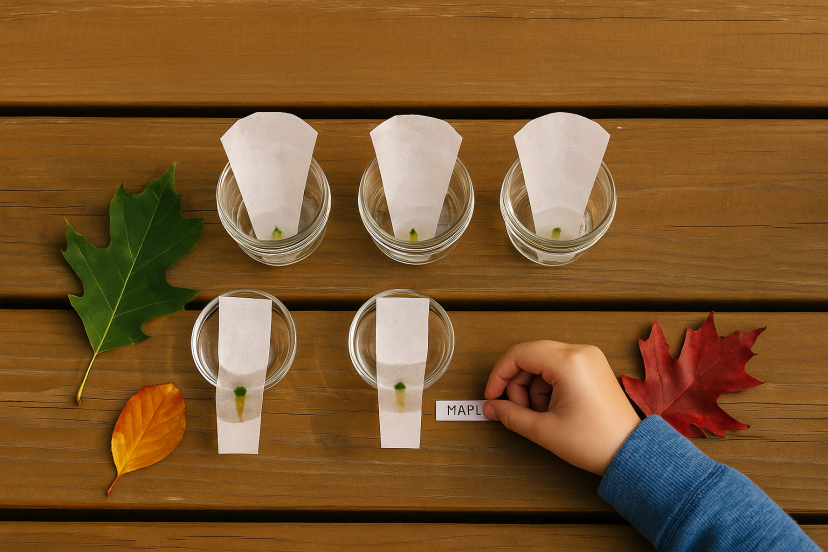
You’ll need: fresh leaf bits, isopropyl alcohol (70–90%), small clear cup/jar, coffee filter cut into strips, pencil, tape.
Steps (kid-tested simple):
- Tear a small leaf piece and crush it in a spoon with a few drops of alcohol.
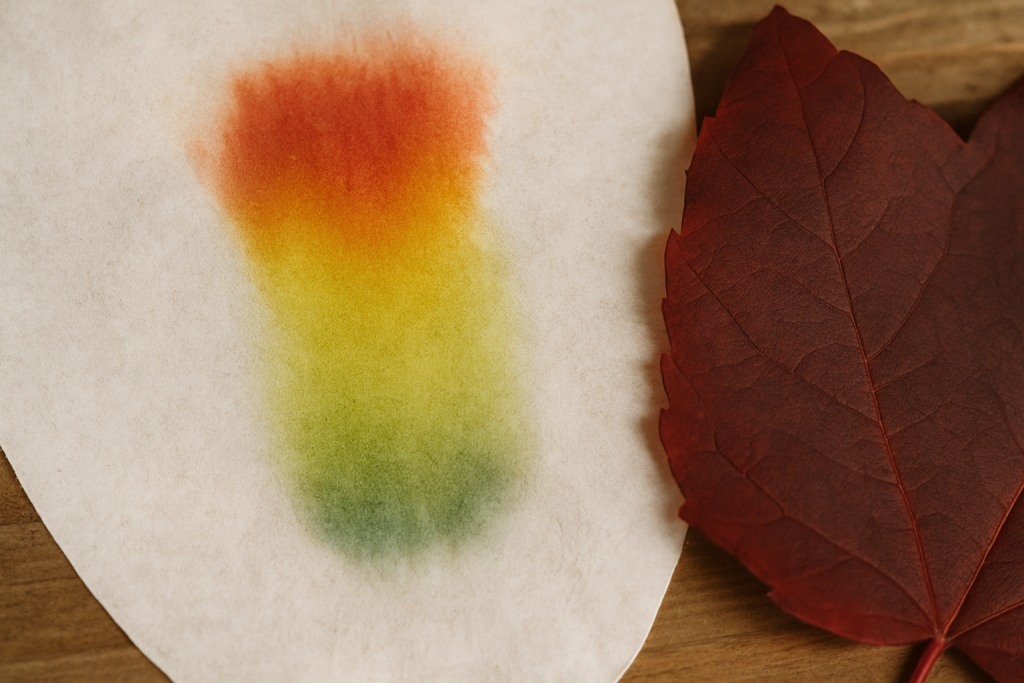
- Dab the green liquid along a pencil line near the bottom of your filter strip.
- Hang the strip in a cup with a shallow pool of alcohol—color line above the liquid.
- Watch as pigments climb: yellow/orange carotenoids, and sometimes reds (anthocyanins).
Talk about it: Chlorophyll usually masks other pigments. As days shorten and temps shift, chlorophyll degrades and other colors emerge. Weather affects how intense reds get—sunny days + cool nights can boost anthocyanins.
Try this twist: Compare strips from different species or different stages (green vs. half-red vs. fully red).
Experiment #2: DIY Leaf Barometer (Weather Link)
Big idea: Leaves can hint at humidity and air pressure changes.
You’ll need: a flexible, freshly picked leaf (magnolia, maple, or similar), a straw or skewer “pointer,” a light cardboard dial, tape, and a jar with balloon stretched over the top (classic barometer).
Steps:
- Build a simple jar barometer (balloon stretched tight as a membrane, straw taped across the top as a pointer).
- Tape your leaf beside the dial; sketch “higher pressure” and “lower pressure” zones.
- Track pointer and leaf edges daily; note any subtle curling or flattening with local weather reports.
Talk about it: In drier air, some leaves curl and reduce exposed surface area; in moister air, they relax. It’s a playful way to connect biology with weather.
Experiment #3: Transpiration Test—Which Leaf Loses Water Fastest?
Big idea: Plants move water from roots to leaves and then out into the air (transpiration).
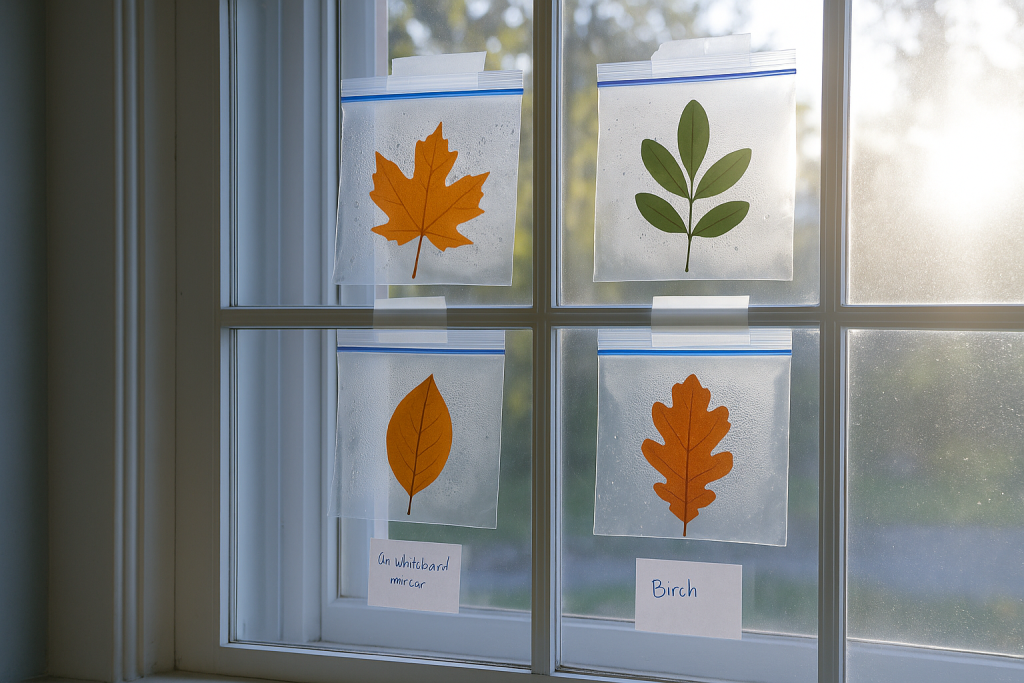
You’ll need: several leaves from different trees, identical zipper bags, string, digital pocket scale (optional), and a sunny window.
Steps:
- Place one leaf per bag with a little air; seal.
- Tape the bags to a sunny window for an hour or two.
- Compare condensation. If you have a scale, mass the leaves before and after (same time window next day) to estimate water loss.
Talk about it: Stomata (tiny pores) regulate water loss. Different leaves—size, thickness, waxiness—change the rate of transpiration.
Math moment: Rank by condensation; if you weighed, compute percent mass change.
Experiment #4: Leaf ID Walk + Data Table
Big idea: Identification is science literacy. You’ll practice observation, classification, and data recording.
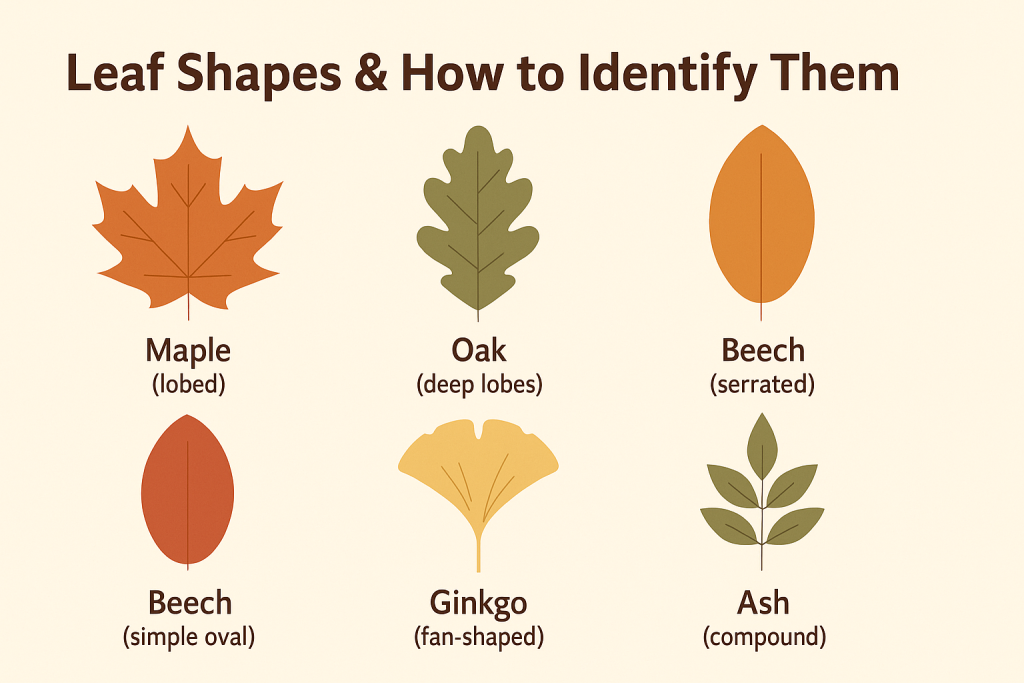
You’ll need: a kid-friendly field guide or leaf deck, clipboard, and a simple table: Tree, Leaf Shape, Edge (smooth/serrated), Color, Notes.
Steps:
- Take a short nature walk.
- Collect or photograph 5–10 different leaves.
- Identify together and fill the table.
Extend it: Plot a bar chart of how many species you found or map locations to discuss microhabitats.
Experiment #5: Press, Preserve, and Compare Pigments
Big idea: Preserve leaves to analyze structure and color over time.
You’ll need: a small flower/leaf press (or heavy books), blotting paper, and a laminator if you’d like to create reference cards.
Steps:
- Press for a week.
- Mount pressed leaves on index cards with labels (species/date/location).
- Optional: laminate to create a durable “leaf library.”
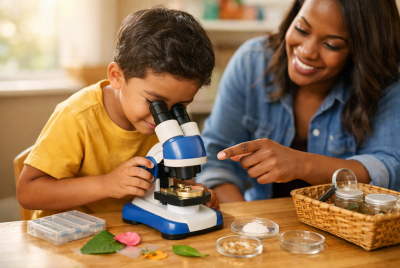
STEM link: Examine venation under a pocket microscope; sketch what you see.
Bonus Mini Investigations (Quick Wins)
- Floating vs. sinking: Do dry vs. fresh leaves behave differently? Why?
- Symmetry spotting: Fold leaves down the midrib—how symmetrical are they?
- Color tally: Count how many leaves on your street are mostly yellow vs. red vs. brown and graph it.
- Engineering: Build the strongest “leaf raft” and test with coins.
Math Connections You Can See (and Touch)
- Area estimation: Trace a leaf on graph paper to estimate area; compare species.
- Ratios: Compare vein length to leaf length—does the ratio hold across species?
- Rates: In the transpiration test, calculate water loss per hour.
- Probability: If 30% of collected leaves are maple, what’s the chance the next random pick is maple?
Literacy & Art Extensions (STEAM it up)
- Poetry prompt: “I used to be green, now I’m…”—write from the leaf’s perspective.
- Science notebooking: Draw, label, and add 1–2 sentences about function (edge, tip, veins).
- Collage & contrast: Pressed leaf collage with notes on pigment differences you observed.
Inclusion Tips: Multi-Age, Neurodiverse, Budget-Friendly
- Multi-age: Older kids run data tables and graphs; younger kids sort by color/shape.
- Sensory supports: Crunch sounds, smooth lamination, and gentle outdoor movement can be regulating. For more calming, hands-on ideas, see these sensory play tools and activities on our guide to sensory toys for kids (perfect companions to leaf work).
- Budget: Coffee filters, jars, and scrap cardboard do most of the heavy lifting.
Assessment, Reflection & Troubleshooting
- Quick checks: Ask, “What did you notice?” “What changed?” “What would you test next?”
- Journaling: Date, place, weather, and 1-sentence conclusion per experiment.
- Fixes: If chromatography bands are faint, try fresher leaves, more pigment, or higher-% alcohol; if transpiration bags show no condensation, choose fresher leaves or add time/sun.
🔹 Autumn Leaf STEM: Handy Amazon Tools
Below are five practical tools that make Autumn Leaf STEM smoother. (Product availability, pricing, and warranty may vary—always check the seller page.)
1) Amazon Basics 9-Inch Thermal Laminator Machine
What it does: Protects reference cards, data charts, and pressed-leaf IDs.
Features: Quick warm-up, 3–5 mil pouches, compact body.
Pros: Affordable, easy for first-time users, tidy results.
Cons: Needs pouches; heat requires adult handling.
Best for: Home/classroom kits that will be reused.
Review snapshot: Praised for simple, reliable laminating at a budget price; occasional jams if pouches misaligned.
2) Worown 6″×6″ Flower/Leaf Press Kit (4-Layer)
What it does: Presses multiple leaves at once for long-term study.
Features: Wood plates, straps, lining paper, four-layer capacity.
Pros: Compact, efficient, reusable drying plates.
Cons: Smaller leaves fit best; plan ahead for dry time.
Best for: Building a “leaf library” and pigment comparison cards.
Review snapshot: Fans love the multi-layer design; a few note size limits for oversized leaves.
3) WINWEND Kids Pocket Microscope (up to ~1000×, 2″ screen)
What it does: Magnifies venation, stomata impressions, and pigment edges.
Features: Portable, built-in screen and storage (select models).
Pros: Kid-friendly exploration anywhere; photo/video capture helps portfolios.
Cons: Magnification claims vary; image quality depends on lighting and steady hands.
Best for: Curious learners who love seeing details up close.
Review snapshot: Parents like the portability and simple interface; some wish for clearer instructions on focusing.
4) Trees of North America (Golden Field Guide)
What it does: A classic, visual field guide for family or classroom walks.
Features: Clear IDs, range info, and helpful visuals.
Pros: Broad coverage; durable reference.
Cons: Younger kids may need adult help with terms.
Best for: Structured leaf ID walks and species discussions.
Review snapshot: Appreciated for accuracy and scope; a few prefer simpler, kid-only formats.
5) Fuzion Digital Pocket Scale, 500g × 0.01g
What it does: Lets you measure leaf mass before/after drying for data-rich experiments.
Features: Tare, multiple units, compact build.
Pros: Great price-to-function; clear LCD.
Cons: Needs gentle handling; calibrate for best results.
Best for: Quantitative comparisons (transpiration, drying).
Review snapshot: Users like accuracy for a tiny scale; occasional calibration questions.
Comparison Table (quick glance)
| Model | Key Spec(s) | Warranty | Approx Price/Tier | Best For |
| Amazon Basics 9″ Laminator | 3–5 mil pouches; compact | Varies by Amazon Basics policy | Budget | Durable leaf cards, charts |
| Worown 6″×6″ Press | 4-layer capacity, wood plates | Varies by seller | Budget | Pressing multiple leaves |
| WINWEND Pocket Microscope | Up to ~1000×; 2″ screen | Varies by seller | Budget–Mid | Field magnification |
| Trees of North America (Guide) | Visual IDs, range maps | N/A (book) | Budget | Leaf ID walks |
| Fuzion 500g × 0.01g Scale | Tare; mini size | Varies by seller | Budget | Measurement & data |
🧪 Research-Backed: Why Nature + Inquiry Works
Outdoor learning is not just “nice to have.” A systematic review found learning in natural settings boosts engagement, collaboration, and in some cases academics—while supporting self-concept and motivation. That’s gold for young scientists.
Meanwhile, meta-analyses and reviews of inquiry-based science show that asking questions, investigating with simple materials, and drawing conclusions strengthen critical thinking and deepen understanding—exactly what your leaf labs deliver.
Curious about the science of color? Extension experts explain how sunny days and cool nights trap sugars in leaves and ramp up red anthocyanin pigments, and botanists have explored how those pigments function in aging leaves. Use these insights to guide predictions in your chromatography.
FAQs
1) What age is Autumn Leaf STEM best for?
Great for pre-K through middle school with tweaks. Little ones sort and press; older kids model transpiration, run measurements, and graph results.
2) Is chromatography safe to do at home?
Yes—with adult supervision. Use small amounts of isopropyl alcohol, keep away from flames, and dispose responsibly. Try water-based alternatives (rubbing leaves onto filter paper) for a gentler version.
3) How do I keep pressed leaves from crumbling?
Make sure they’re fully dry, then mount on cards and laminate or slip into clear sleeves. Store flat.
4) Which leaves make the “best” experiments?
Pick a mix of species and stages. Flexible, colorful leaves are great for chromatography and pressing; thicker, waxy leaves add contrast in transpiration tests.
5) How can I add technology without screens taking over?
Use a pocket microscope to capture just a few photos for a lab sheet, or log observations on a shared digital doc. Keep the focus on observing and doing.
Conclusion: Your Fall, Your Lab
You don’t need a fancy setup to raise curious thinkers—just a handful of leaves and a willingness to notice, test, and wonder. With these Autumn Leaf STEM ideas, you’ll connect science to real life, build confidence, and create keepsake leaf cards you’ll love pulling out next year.
If you want even more hands-on calm-meets-curiosity, peek at our guide to sensory toys for kids and pair a quiet sensory bin with your leaf journal time. Now grab a sweater, pockets, and a pencil—your outdoor lab is waiting.