Top Toddler Learning Toys That Boost Early Skills
We may earn a commission for purchases made using our links. Please see our disclosure to learn more.
If you’ve ever bought a “learning toy” that got ignored after 47 seconds… yep, same. Toddlers are tiny, honest critics. The good news? The best toddler learning toys aren’t the loudest or fanciest—they’re the ones that quietly fit your child’s stage and invite real play (the kind where they repeat something 800 times and somehow it’s… working).
Affiliate note: This post may earn from qualifying purchases at no extra cost to you.
Why toddler learning toys matter (even when it looks like “just messing around”)
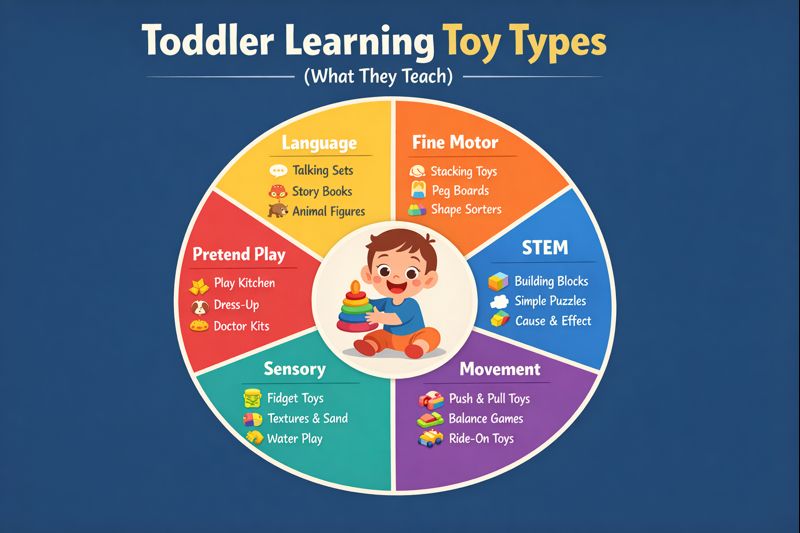
Toddler brains learn in bursts—touch, try, drop, repeat. When a toy is well-designed, it turns everyday play into practice for real-life skills like:
- Language (naming, asking, repeating, listening)
- Fine motor control (pinching, twisting, stacking, placing)
- Early math (sorting, counting, patterns, size comparisons)
- Social-emotional skills (taking turns, pretend play, calming down)
- Confidence (“I did it myself!” is toddler rocket fuel)
Think of toddler learning toys like little “ramps” that make skills easier to climb—without feeling like a lesson.
The 60-second toy-picking framework (age, interests, and the “next small challenge”)
When you’re staring at a wall of toys online, use this quick filter:
- What skill are we building right now?
- Speech? Hand strength? Sorting? Self-regulation?
- Is it one step harder than what they already do?
If it’s too easy, they get bored. Too hard, they rage-quit (and honestly, fair). - Does it match their personality?
- Movers need push/pull, balls, toss games.
- “Little engineers” need stack/sort/build.
- Storytellers need pretend play and characters.
- Can I picture them using it without me “performing” the toy?
If it needs a full demo every time, it probably won’t last.
Safety, mess, and “will my kid actually use this?” checklist
Before you hit Buy:
- Choking hazards: avoid tiny detachable parts for younger toddlers.
- Durability: toddlers are basically stress-test machines.
- Volume: if it has sound, make sure it’s not “airport runway” loud.
- Clean-up reality: open bins > tiny bags with tiny pieces.
- Open-ended wins: toys that can be used 10 different ways usually stay in rotation longer.
Language and communication toys that actually get used
You don’t need flashcards for language. You need repetition + meaning.
Try toys that encourage:
- Naming (animals, foods, colors)
- Simple “what/where” questions
- Pretend conversations (“Hello, Mr. Bear. Do you want tea?”)
Parent move that helps: pause on purpose.
When your toddler points, wait two seconds and say: “Tell me—ball?” That tiny pause invites words.
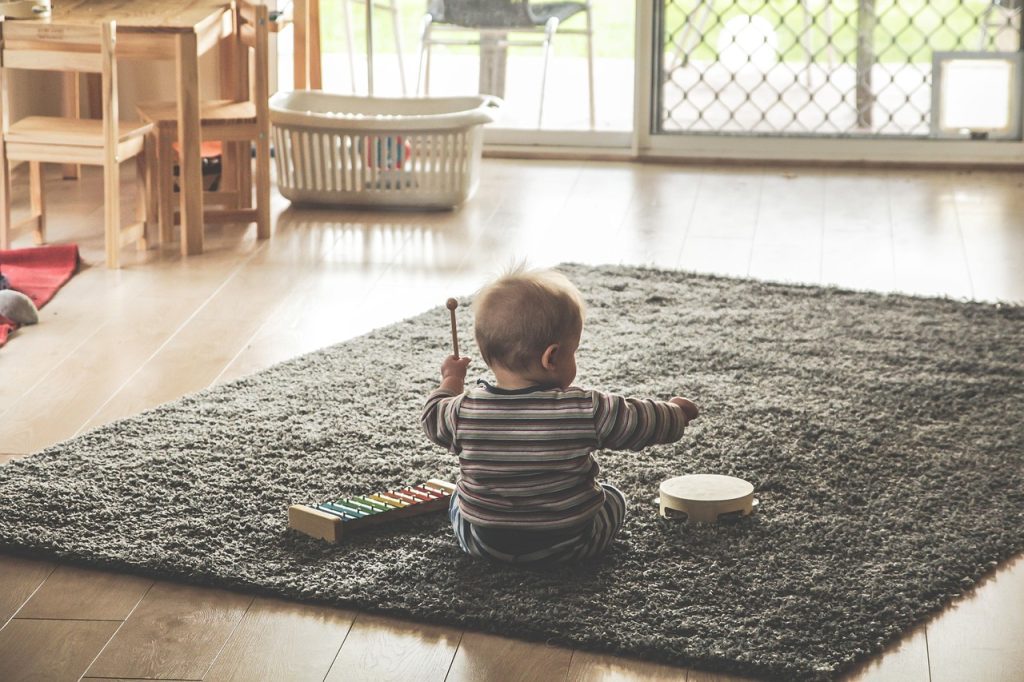
Fine motor and hand-strength toys (the secret pre-writing training)
Fine motor is the foundation for later stuff like zippers, buttons, and crayons that don’t snap in half.
Look for:
- Push-in / pull-out pegs
- Chunky tweezers
- Shape sorters
- Stacking pieces with resistance (not too easy, not impossible)
If your toddler loves filling and dumping containers, congratulations—you’ve got a future fine-motor champ. Lean into it.
Early math and sorting toys (counting is optional at first)
Toddlers do “math” before they can say numbers clearly.
Skills to target:
- Same vs different
- Big vs small
- More vs less
- Patterns (red-blue-red-blue is toddler wizardry)
Sorting toys work best when you keep the goal simple:
“Can you put all the yellow ones here?” That’s math. That’s logic. That’s also them feeling powerful.
Problem-solving and logic toys (without the meltdown factor)
A good logic toy gives that almost-there feeling.
Look for:
- One clear goal (fit the shape, match the piece, open the latch)
- Immediate feedback (it fits or it doesn’t)
- Room for trial-and-error (no “wrong buzzer,” please)
If your toddler gets frustrated fast, pick toys with fewer steps, then build complexity slowly. You’re not raising a robot—you’re building patience in tiny doses.
Creativity and art-friendly learning toys (for toddlers who hate being told what to do)
Some toddlers will not be “instructed.” They must discover.
Good creativity-leaning toddler learning toys include:
- Chunky crayons or washable markers
- Reusable sticker books
- Simple musical instruments
- Big building shapes (blocks, magnets designed for littles)
The learning happens when they choose: colors, sounds, sequences, stories. Their brain loves being the boss.
Pretend play and social-emotional toys (where empathy quietly grows)
Pretend play is where toddlers practice the stuff you can’t exactly lecture:
- Caring (“baby is sleepy”)
- Turn-taking (“my turn, your turn”)
- Daily routines (feeding, cooking, cleaning—yes, really)
If your child lives in a busy home (siblings, cousins, grandparents, neighbors popping in), pretend play becomes a sweet way to process all that social energy.
Sensory play and self-regulation toys (the calm-down helpers)
Sensory toys can help toddlers focus and settle—especially during transitions.
Good options:
- Textured pieces to handle
- Pop-in/pull-out toys with resistance
- Heavy-ish stacking toys (not too heavy, just satisfying)
- Soft “fidget” style items for little hands
Pro tip: save one calming toy for specific moments (after daycare, before dinner). Novelty makes it work better.
Movement-based learning toys (gross motor + brain power)
Some toddlers learn best while moving. They’re not being “wild”—they’re regulating.
Movement toys can support:
- Balance
- Coordination
- Cause-and-effect
- Spatial awareness
Even simple “push and walk” toys can turn into learning labs: “Stop/go,” “fast/slow,” “turn left/right,” “find the red block.”
Montessori-inspired picks and how to rotate toys (so everything feels new again)
You don’t need a perfect beige shelf.
You just need:
- Fewer toys out at once (3–6 is plenty)
- A simple rotation (swap weekly or every two weeks)
- A mix of skill areas (motor + language + pretend play)
Rotation tip:
Put away half the toys for 10–14 days. When they come back, your toddler will react like you bought a whole new store.
STEM for toddlers without screens (plus seasonal ideas)
STEM for toddlers is basically: build, pour, stack, test, repeat.
Easy, screen-free STEM play:
- Build a tower and “predict” which block will fall first
- Sort objects by texture (smooth/rough) or weight (light/heavy)
- Make ramps with books and roll balls (cause-and-effect heaven)
Want a fun themed twist? Try these Halloween STEM activities for kids when you’re in the mood for seasonal, hands-on experiments: Halloween STEM activities for kids
5 toddler learning toys worth buying (parent-tested picks)
Below are five toddler learning toys with strong reviews and clear “what it teaches” value.
1) VTech Sit-To-Stand Learning Walker (Frustration Free Packaging)
Why it’s great: A classic for early walkers who also love buttons, music, and simple cause-and-effect.
Features:
- Push-walker support for movement learners
- Activity panel for shapes, sounds, and motor practice
- Grows with toddlers as they get steadier
Best for: Busy toddlers who learn through motion and repetition.
2) VTech Touch and Learn Activity Desk Deluxe (Frustration Free Packaging)
Why it’s great: Gives “independent play” energy while building early skills.
Features:
- Touch-and-respond interactions (letters, numbers, music, prompts)
- Desk-style setup that feels like a real “work station”
- Lots of variety to reduce boredom
Best for: Toddlers who like structured play and mimicking “big kid” activities.
3) Learning Resources Spike the Fine Motor Hedgehog (Sensory Toy)
Why it’s great: A simple peg-in/peg-out toy that builds real hand strength fast.
Features:
- Chunky pieces sized for toddler hands
- Great for color play, counting, and pattern practice
- Easy storage and cleanup
Best for: Toddlers working on fine motor control (and parents who want low-mess wins).
4) Learning Resources New Sprouts Munch It! Pretend Play Food (20 Pieces)
Why it’s great: Pretend food turns into language practice and early categorizing (“fruit vs snack,” “one more,” “all done”).
Features:
- Encourages pretend play conversations
- Supports sorting and matching games
- Great for play kitchens or picnic pretend play
Best for: Social-emotional learning, language building, and routine play.
5) Learning Resources New Sprouts Serve It! Dish Set (24 Pieces)
Why it’s great: “Serving” play is secretly turn-taking, sequencing, and empathy practice.
Features:
- Role-play friendly pieces for “restaurant” and “family dinner” games
- Supports sharing, manners, and routine language
- Durable set for repeated play
Best for: Pretend play households (siblings, cousins, classrooms, playdates).
Research-backed: why play works (and why “drill toys” often flop)
Here’s the credibility piece that matters: toddlers learn best when play feels active, not like a test.
- The American Academy of Pediatrics explains how play supports development and helps build strong caregiver-child relationships—basically, play isn’t “extra,” it’s foundational. You can read the clinical report here: toddler learning toys and the AAP’s “Power of Play” guidance.
- Spatial skills (think: building, fitting, rotating, stacking) matter more than people realize—and training can help. A large meta-analysis found an average training effect of Hedges’ g = 0.47, suggesting meaningful improvements from spatial practice over time. That’s a strong argument for blocks, stackers, and hands-on building as legit learning tools: toddler learning toys that strengthen spatial skills (Uttal et al., 2013 meta-analysis).
FAQs about toddler learning toys
What are the best toddler learning toys for a 2-year-old?
Look for toys that support language, sorting, and fine motor skills—shape sorters, peg toys, pretend play sets, and simple music toys usually hit the sweet spot.
Are Montessori toys better than electronic learning toys?
Montessori-style toys often encourage deeper, open-ended play. Electronic toys can still help—just aim for balance, and choose ones your toddler can explore without you constantly “running the show.”
How many learning toys should a toddler have at once?
Less is more. Keeping 3–6 toys out (and rotating the rest) usually leads to longer play and fewer “I’m bored” moments.
How do I know if a toddler toy is truly educational?
If it invites your child to do something—sort, stack, match, pretend, problem-solve—it’s educational. If it mostly performs for them, it’s more entertainment than learning.
What toddler learning toys help with speech delay?
Toys that spark interaction help most: pretend play sets, picture/word-style toys, and anything that encourages naming and turn-taking. The best results come when you play with them, even for 5 minutes.
Conclusion (the parent-to-parent truth):
You don’t need a giant toy collection. You need a few great toddler learning toys that match your child’s stage and personality—and give them a tiny challenge they can conquer. Rotate them, keep play simple, and celebrate the small wins (because those are the ones that quietly build big skills).